Single nutrients · Tablet (mini)
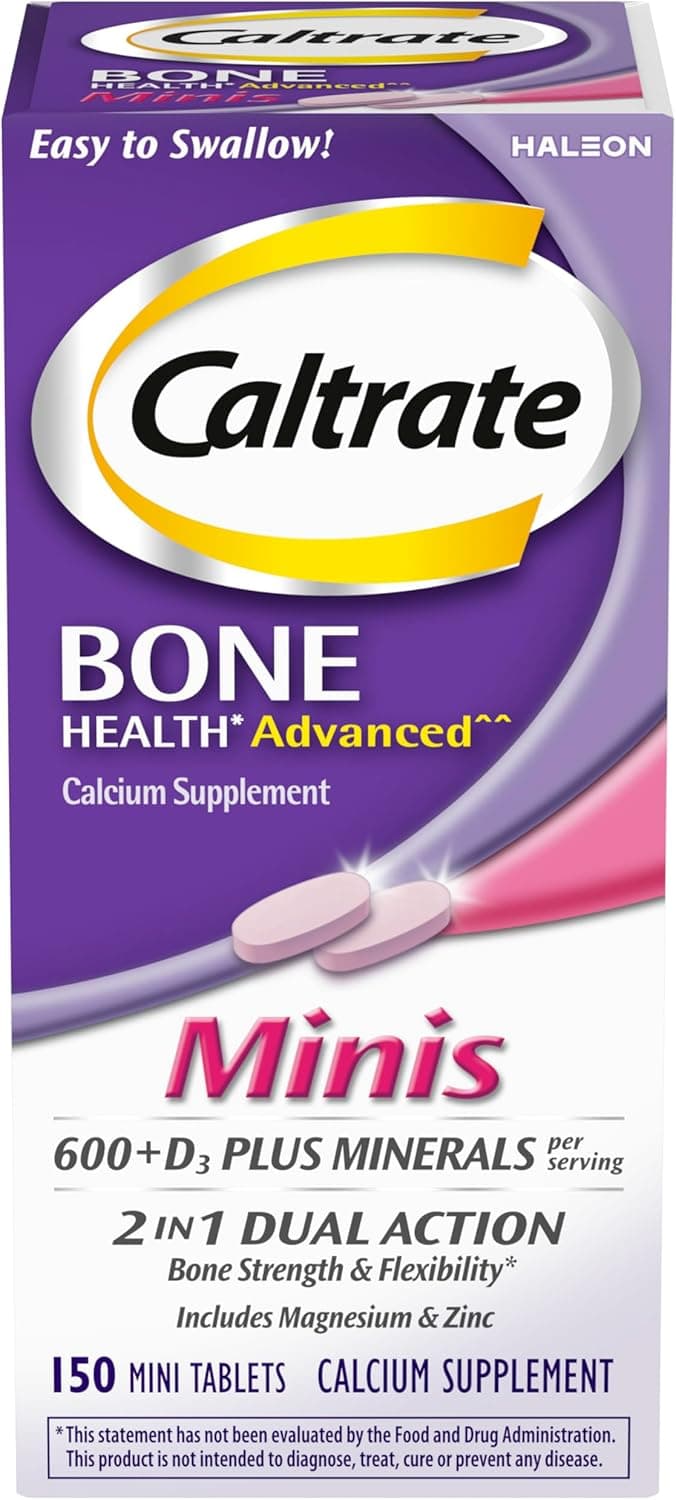
Caltrate Minis 600 Plus D3 Plus Minerals — Calcium and Vitamin D Supplement, 150 Tablets
Mini calcium tablets with D3 and additional minerals for adults prioritizing bone density support alongside diet. Caltrate is a long-running bone-health brand.
What stands out
- Smaller pill size than many calcium carbonate tablets.
- Adds magnesium/zinc/manganese/copper in some SKUs—verify exact mineral panel on label.
- 150-count bottle for sustained use.
Practical considerations
- Multiple tablets per day may be needed to reach total calcium goals.
- Take with food to improve tolerance and absorption for carbonate forms.
Full review
Dietary supplements are not evaluated by the FDA for safety or efficacy in the same way as drugs. This long-form review is for general education only and is not medical advice, diagnosis, or treatment. Discuss any supplement with a qualified clinician, especially if you are pregnant, nursing, take prescription medications, or have a chronic condition.
Caltrate Minis: smaller carbonate tablets with D3 and mineral partners
Caltrate Minis 600 Plus D3 Plus Minerals targets adults who want calcium carbonate convenience in a swallow-friendlier size than traditional chalk disks, bundling vitamin D3 with magnesium, zinc, manganese, and copper in a bone-density narrative familiar to pharmacy shoppers. A 150-count bottle’s duration depends on how many minis equal your personal calcium target—often multiple tablets daily—so cost-per-elemental-calcium math beats bottle sticker price.
Carbonate needs acid for dissolution; pairing with meals helps many users, especially those on chronic PPI therapy where absorption nuances shift toward citrate discussions with clinicians.
Why copper appears alongside zinc and manganese
Multimineral bone products sometimes echo older nutritional synergies and marketing completeness rather than individualized deficiency correction. Copper deficiency is rare in broad diets; copper excess is toxic. If you already take a comprehensive multi plus this product, trace mineral totals may stack unexpectedly.
Wilson disease and other copper handling disorders make any copper-containing supplement inappropriate without specialist oversight.
Magnesium’s dual life as GI relaxant and mineral load
Magnesium salts can soften stool—a feature or bug depending on your baseline motility. If you are titrating magnesium citrate elsewhere for constipation, adding Caltrate may push osmotic effect farther than intended.
Kidney failure changes excretion of magnesium and other electrolytes; nephrology input matters.
Spacing from osteoporosis drugs and thyroid hormone
Oral bisphosphonates require strict empty-stomach rules; calcium must wait many hours afterward. Calcium still interferes with levothyroxine if timed poorly. Write a timeline rather than improvising daily.
Post-RYGB patients may need chewable citrate protocols instead.
Comparison with Nature’s Bounty calcium softgels twin-pack
Softgels may feel smoother for some swallowers; tablets allow splitting only if scored and approved. Gummies sacrifice elemental density for taste.
Choose the form you will take consistently with correct spacing.
Lifestyle: dairy, fortification, and exercise
If you tolerate dairy, two servings daily shrink supplemental burden. Fortified soy or pea milks help plant-based eaters. Resistance training signals bone formation more than passive mineral flooding alone.
Smoking cessation and moderate alcohol improve remodeling balance.
Disclaimer
Nutcor Lab does not prescribe osteoporosis regimens. Supplements are not FDA-approved to replace prescription bone therapies.
Discuss kidney stones and hyperparathyroidism history with clinicians before use.
Mini tablet splitting myths and mineral stacking discipline
Unless scored and pharmacist-approved, splitting mini tablets can yield uneven carbonate chunks that irritate the stomach without dosing precision. If you also use magnesium oxide for constipation, sum elemental magnesium across products to avoid diarrhea-driven dehydration that paradoxically worsens stone risk. Athletes in weight-class sports should not use calcium loading as a crutch for electrolyte plans designed by coaches without medical oversight.
Snow shoveling season pairs with vitamin D discussions in northern latitudes; still wear boots with grip—calcium does not prevent icy falls.
Elderly couples sharing one bottle should still verify each person’s kidney function independently before syncing routines.
Nephrology clinics, dialysis transitions, and binder timing
Patients approaching dialysis have phosphate binder schedules that interact with meal calcium in ways retail articles cannot standardize. Transplant lists introduce new immunosuppressant grids where mineral supplements require transplant pharmacy approval. If you crush tablets for feeding tubes, verify whether Caltrate minis are appropriate for that route—some products clog lines.
Home health nurses documenting edema should still ask about hidden calcium stacks because fluid shifts confound both heart failure titration and supplement counseling.
Snowbird couples who winter in two states should photograph which bottle lives in which kitchen to avoid double-dosing when suitcases get unpacked hastily after flights.
Pharmacists reviewing kidney panels sometimes annotate charts when patients casually mention antacid chewing that shifts stomach pH enough to alter carbonate absorption week to week.