Multivitamin · Tablet
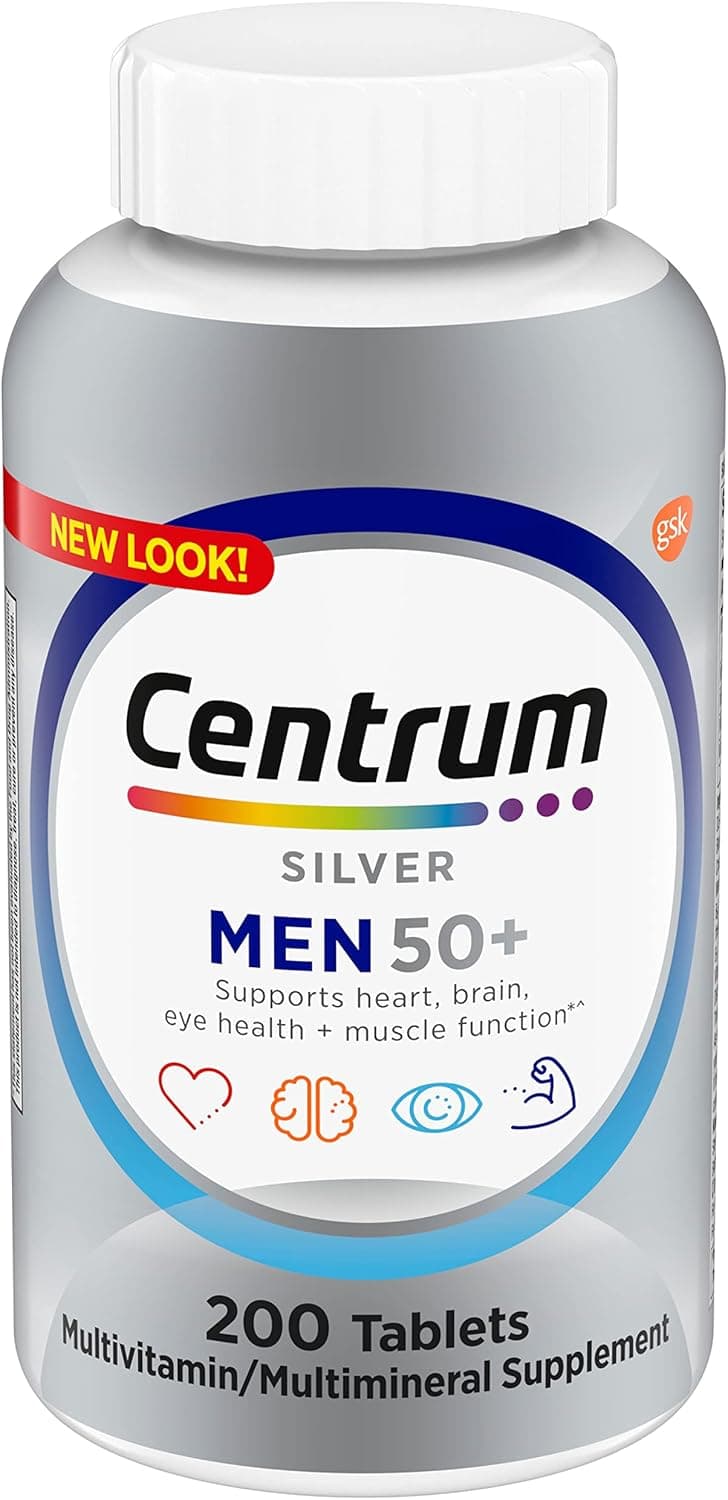
Centrum Silver Men's 50+ Multivitamin with Vitamin D3, B-Vitamins, Zinc for Memory and Cognition - 200 Tablets
Centrum Silver Men's 50+ reformulates the flagship Centrum around the nutrient concerns of older men: elevated vitamin D3 and B12, no unnecessary iron, and zinc for normal immune and metabolic function. The 200-tablet bottle provides approximately seven months of daily supply.
What stands out
- Vitamin D3 and B12 highlighted—both nutrients where needs or absorption efficiency shift meaningfully after 50.
- Iron-free; appropriate for most men eating a mixed diet who do not have documented deficiency.
- 200-count is a long supply run suited to consistent long-term supplementation.
Practical considerations
- Men on statins, metformin, or PPIs should review nutrient interactions with a pharmacist.
- Zinc from multiple supplements can accumulate; check total daily intake across all products.
Full review
Dietary supplements are not evaluated by the FDA for safety or efficacy in the same way as drugs. This long-form review is for general education only and is not medical advice, diagnosis, or treatment. Discuss any supplement with a qualified clinician, especially if you are pregnant, nursing, take prescription medications, or have a chronic condition.
Centrum Silver Men's 50+: the case for age-targeted formulation
Centrum Silver Men's 50+ is reformulated from the general adult men's Centrum to address nutrient priorities that shift in the second half of life. The most visible changes are an increased emphasis on vitamin D3 and B12—both nutrients where absorption or conversion efficiency tends to decline with age and where deficiency has meaningful clinical consequences—and a formulation without the high iron appropriate for some younger populations but generally unnecessary for men over 50. This is not cosmetic age-marketing but reflects a body of clinical nutrition guidance around what actually changes in men's micronutrient needs as they enter their sixth decade.
The 200-tablet count is notable for a daily supplement: at one tablet per day, this is approximately seven months of supply, making it practical for consistent long-term use without frequent reorders. This matters because the value of a multivitamin is primarily built through sustained daily use rather than episodic consumption during periods of concern.
Vitamin D3 and B12: why the 50+ formula highlights both
Vitamin D synthesis from sunlight requires UVB exposure and the conversion capacity of skin, which decreases with age. Older adults living in northern latitudes, spending most time indoors, or using high-SPF sunscreen consistently are at elevated risk of vitamin D insufficiency. While a multivitamin provides a fixed dose rather than the personalized dosing a clinician might prescribe based on serum 25-OH-D levels, it provides a daily baseline that is better than nothing for many sedentary or homebound older adults. If you know your vitamin D status from a recent blood test, that number is more actionable than any multi label.
B12 in supplemental form (cyanocobalamin or methylcobalamin) is absorbed via a different mechanism than food-bound B12, which requires an acidic stomach environment to liberate from protein. As gastric acid production declines with age—and is further suppressed by proton pump inhibitors, which are widely prescribed in older adults—food-bound B12 becomes less reliably absorbed. Supplemental crystalline B12 bypasses this bottleneck, making its inclusion in a 50+ multi genuinely relevant rather than a redundant add-on.
Memory and cognition framing: calibrated expectations
Like Centrum Silver Women's, this men's version references support for memory and cognition in older adults. The biological basis is the role of B vitamins in normal brain metabolism and the emerging research on vitamin D and neurological function. Recent large randomized trials examining multivitamin use in older adults have suggested statistically modest but potentially meaningful associations with cognitive outcomes, though the research is still evolving and individual results will vary. A clinician specializing in geriatric medicine or neurology is the right person to discuss cognitive health supplementation in depth; a retail multi is a reasonable baseline but not a targeted cognitive intervention.
Stacking this multi with other supplements: what to check
Men over 50 often take statins, blood pressure medications, metformin, or proton pump inhibitors—drug classes that interact with micronutrients in documented ways. Statins may reduce CoQ10 synthesis (a nutrient not in this multi); metformin can deplete B12 over time (a reason this multi's B12 content is worth noting); PPIs reduce B12 absorption from food (another B12 relevance point) and may reduce magnesium and other mineral levels long-term. If you are on any of these medications, a pharmacist medication therapy management review is worth requesting.
Men who also take a zinc-containing immune supplement, a prostate-focused formula with additional zinc, or a dedicated selenium product should calculate combined daily totals to stay within safe ranges. Selenium in particular has a narrow therapeutic window where excess over time is associated with adverse effects.
Disclaimer
Nutcor Lab does not provide medical advice. This content is educational and intended to support informed supplement purchasing decisions.
Supplements are not FDA-evaluated to prevent, treat, or cure disease. Verify the current Supplement Facts on the live product listing.