Multivitamin · Tablet
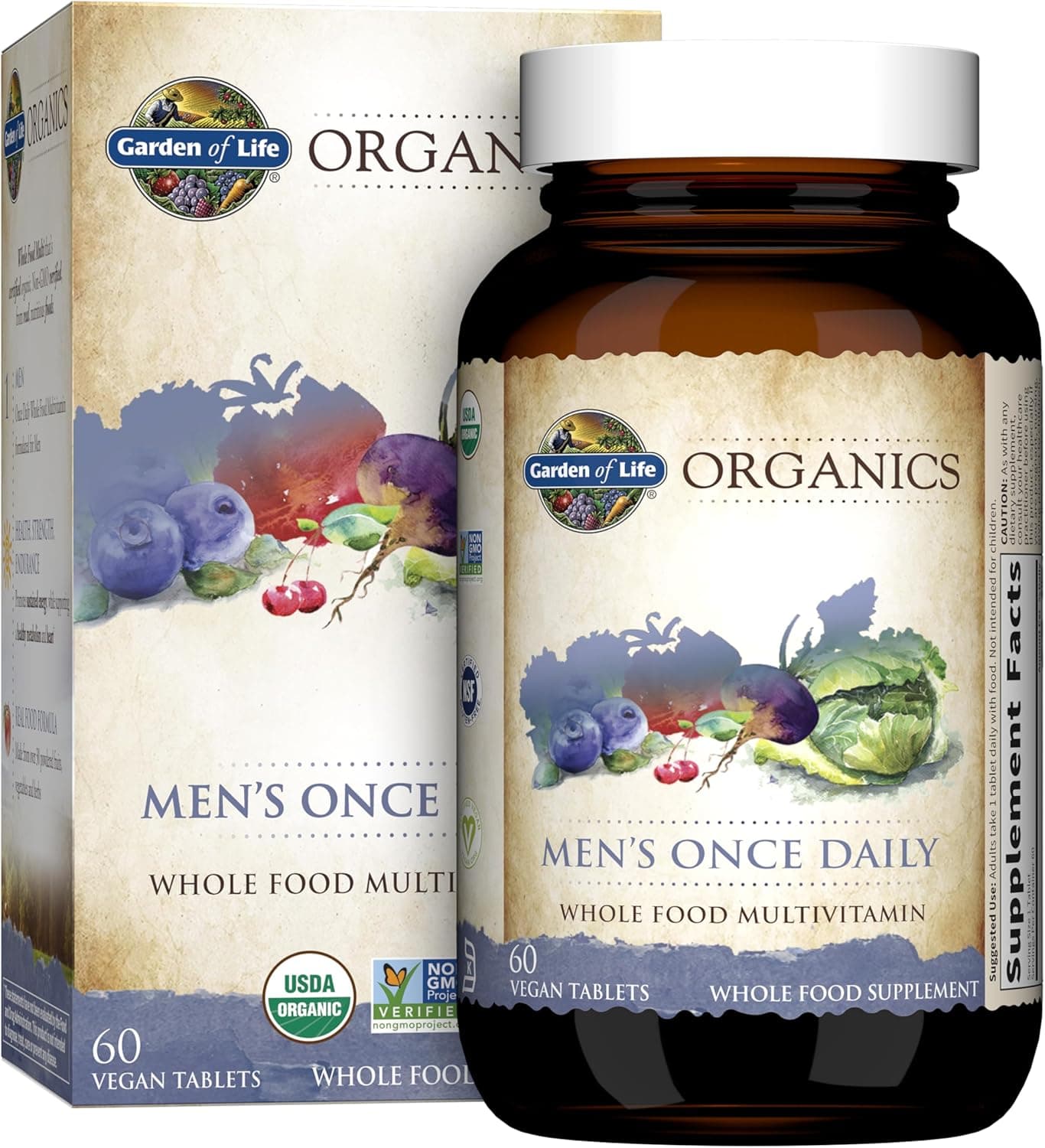
Garden of Life Once Daily Whole Food Multivitamin for Men, Organic Mens Vitamins & Minerals, Vitamin C, Zinc, Vegan, for Health & Well-Being, 60 Tablets
A vegan, whole-food-based men's multivitamin using certified organic food-sourced nutrients rather than synthetic isolates. Formulated without iron and suited to men who prefer plant-sourced, clean-label supplements.
What stands out
- Certified organic, vegan formula—aligns with plant-based and minimally processed dietary values.
- Iron-free design consistent with most men's multivitamin guidance.
- 60-tablet once-daily supply; whole-food base may have a stronger aroma than synthetic tablets.
Practical considerations
- Whole-food framing does not guarantee superior absorption—dose and form still matter most.
- Check third-party verification status (NSF, USP) if potency accuracy is a priority for you.
Full review
Dietary supplements are not evaluated by the FDA for safety or efficacy in the same way as drugs. This long-form review is for general education only and is not medical advice, diagnosis, or treatment. Discuss any supplement with a qualified clinician, especially if you are pregnant, nursing, take prescription medications, or have a chronic condition.
Whole food multivitamins: what the 'organic' claim actually means
Garden of Life positions its once-daily men's multi as 'whole food' and 'organic,' which refers to the base of the formula: nutrients are cultured with or derived from certified organic fruits, vegetables, and other food sources rather than synthesized from isolated chemical precursors. Proponents argue that this preserves cofactors—enzymes, phytonutrients, and other compounds—that come along with food-derived nutrients and may affect how the body recognizes and processes them. Critics note that clinical evidence for meaningful absorption differences between food-derived and synthetic vitamins is limited for most nutrients, and that the dose on the label matters at least as much as the form.
What the whole-food framing does reliably offer is a cleaner ingredient list without artificial colors, synthetic binders, or fillers that some consumers prefer to avoid. For adults who have made organic and minimally processed food a conscious lifestyle choice, a supplement that aligns with those values may improve adherence—which matters more than debating cofactors in a vacuum.
Men's-specific formulation: what is and is not included
The Garden of Life men's multi is formulated without iron—consistent with the mainstream approach for adult male supplements where dietary iron from a varied diet is usually sufficient—and includes nutrients associated with men's health discussions, including zinc, selenium, and B vitamins at relevant doses. It is also vegan, which distinguishes it from many mainstream gelatin-capsule multivitamins and from products using animal-sourced vitamin D3 (lanolin) or omega-3s (fish oil). Vegan D3 from lichen exists and is used in plant-based supplement lines; verify the vitamin D source on the current listing if this distinction is relevant to your diet.
Vegetable capsules rather than tablets are typical for the whole-food supplement category; they can be smaller and easier to swallow but may feel less substantial than a dense tablet. Garden of Life's once-daily tablet line aims for simplicity without the multiple-capsule-per-serving pattern found in some whole-food brands.
Vitamin C, zinc, and immune-adjacent marketing
Vitamin C and zinc both feature prominently on this label and in the product description. Both nutrients have genuine roles in immune function physiology—vitamin C supports oxidative defense mechanisms, and zinc is involved in immune cell development and signaling. The supplement industry frequently amplifies these connections into immunity marketing language that suggests a causal relationship between taking these products and preventing illness. The honest framing is that adequate vitamin C and zinc support normal immune function; supplementing above adequacy in people who already have adequate levels may not add measurable immune benefit. If your diet is genuinely low in these nutrients, a multi that includes them is a reasonable foundation.
Organic certification: what it covers and what it does not
USDA Organic certification covers the sourcing and handling of the raw ingredients from which the supplement is made; it does not guarantee the final product's bioavailability, potency accuracy, or the absence of contaminants at therapeutic concern thresholds. Third-party testing (NSF Certified for Sport, USP Verified, or Informed Sport) tests for potency accuracy and contaminants separately. Garden of Life does have some third-party verified products; confirm whether the specific SKU you are buying carries that verification if it matters for your confidence level.
Practical notes for daily use
The 60-tablet count is a two-month supply at once daily. Whole-food based tablets sometimes have a stronger vegetable or nutritional yeast aroma than synthetic counterparts, which can surprise first-time users but does not indicate a problem. Taking with a meal that includes some fat supports absorption of fat-soluble vitamins D, E, and K. Refrigeration is not required but can extend shelf life after opening in warm climates.
If you are stacking this with other supplements—protein powder, greens blends, or specific targeted nutrients—confirm that vitamin and mineral overlap across all products stays within reasonable ranges to avoid inadvertent excess, particularly for fat-soluble vitamins.
Disclaimer
Nutcor Lab does not provide medical advice. This content is educational and intended to support informed shopping decisions.
Supplements are not FDA-evaluated to prevent, treat, or cure disease. Consult a healthcare provider for personalized nutritional guidance.