Single nutrients · Gummy
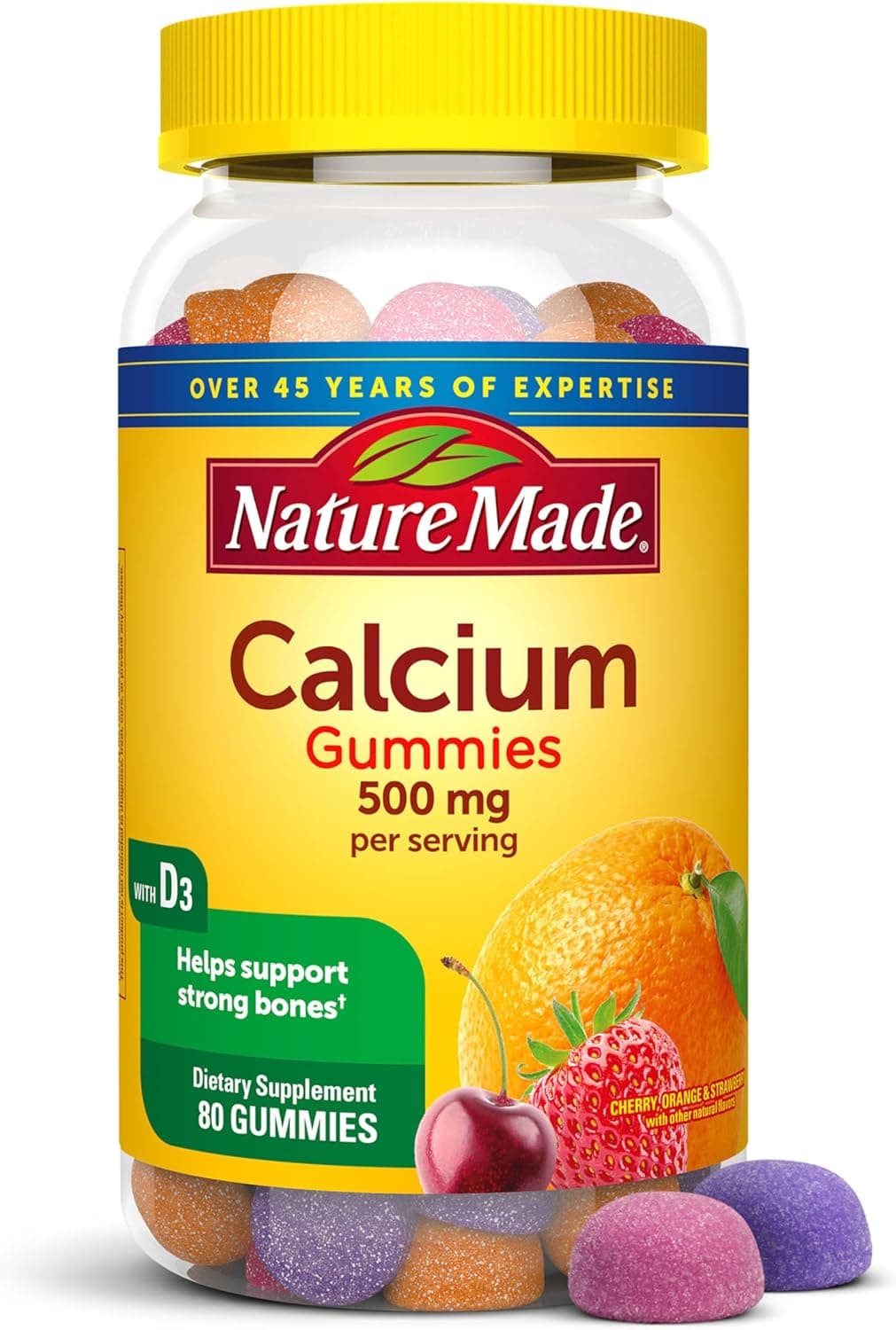
Nature Made Calcium Gummies 500 mg per Serving with Vitamin D3 — Bone Support, 80 Gummies
Calcium carbonate gummies with vitamin D3 for adults who dislike large calcium tablets. Helpful when dietary calcium from dairy or fortified foods falls short of targets.
What stands out
- Vitamin D3 improves calcium absorption context.
- Gummy format improves adherence for some users.
- Nature Made is widely recognized and third-party tested on many SKUs—verify current certifications on packaging.
Practical considerations
- Calcium gummies require multiple pieces to hit higher calcium goals—check elemental calcium per serving.
- Sugar alcohols or added sugars may be present.
Full review
Dietary supplements are not evaluated by the FDA for safety or efficacy in the same way as drugs. This long-form review is for general education only and is not medical advice, diagnosis, or treatment. Discuss any supplement with a qualified clinician, especially if you are pregnant, nursing, take prescription medications, or have a chronic condition.
Calcium carbonate in gummy clothing
Nature Made’s calcium gummies pair calcium carbonate with vitamin D3 in a chewable format for adults who refuse chalky tablets yet still want bone-health framing. Carbonate is inexpensive and elementally dense but requires stomach acid for efficient dissolution—taking with meals often helps older adults on acid suppression, though absorption still may not match citrate forms in some scenarios.
Gummy serving sizes frequently require multiple pieces to reach labeled calcium totals; multiply sugar load accordingly.
Elemental calcium math versus dietary targets
National nutrition guidelines discuss total calcium from food plus supplements for bone health, not gummies alone. Dairy, fortified plant milks, tofu set with calcium, and leafy greens contribute meaningfully before supplements enter chat. If you already drink two lattes with milk, supplement targets shrink.
Hypercalcemia symptoms include constipation, confusion, and polyuria when calcium plus vitamin D stacks go off the rails.
Kidney stones, hyperparathyroidism, and sarcoidosis cautions
Calcium and vitamin D supplementation in patients with absorptive hypercalciuria kidney stones is individualized—some benefit from citrate strategies, others need restriction. Primary hyperparathyroidism and granulomatous diseases can raise activated vitamin D levels; blind supplementation worsens hypercalcemia.
Always disclose supplements before anesthesia and bone scans that use contrast or tracer logic overlapping with mineral metabolism.
Drug interactions and spacing choreography
Calcium binds levothyroxine, bisphosphonates, fluoroquinolones, and tetracyclines if swallowed together. Pharmacies print spacing instructions; follow them more strictly than influencer “morning routine” videos.
Iron and calcium mutually inhibit absorption if combined in one handful of pills.
Comparison with Nature’s Bounty calcium softgels twin-pack
Softgels in our catalog can deliver higher calcium per swallow with less sugar but larger pill phobia. Gummies win adherence for some, softgels win for others.
Caltrate Minis tablets add mineral blends for users wanting magnesium context.
Quality, heat, and summer shipping
Gummies melt into a single sticky mass in hot mailboxes; inspect upon delivery. Nature Made emphasizes testing on many SKUs—verify current certification badges on packaging you receive.
Store sealed; do not combine half-melted blobs with new bottles.
Disclaimer
Nutcor Lab does not diagnose osteoporosis. Bone care requires clinicians and often DEXA imaging.
Supplements are not FDA-approved to prevent fractures.
Carbonate chemistry, PPI users, and post-bariatric alternatives
Achlorhydria from chronic PPI therapy or gastric surgery shifts some patients toward calcium citrate discussions because carbonate dissolution depends on acid. If you sip coffee all morning without food, swallowing gummies on an empty stomach may irritate despite marketing friendliness. Athletes with low energy availability and amenorrhea need endocrine evaluation, not just calcium gummies, to protect bone.
Orthodontic patients should rinse after sticky supplements before replacing aligners.
Elderly buyers on fixed incomes should compare elemental calcium per dollar across gummies, chews, and tablets with pharmacist printouts.
Nursing homes, med pass carts, and dysphagia kitchens
Skilled nursing facilities sometimes prohibit resident-owned gummies unless ordered; families should fax supplement labels before move-in day. Dysphagia-pureed diets still need calcium strategy conversations because thickened liquids alter medication timing. If hospice becomes relevant, calcium goals shift toward comfort rather than density targets—another reason labels are not lifetime contracts.
Speech therapists documenting honey-thick liquids for aspiration risk should also note whether gummy residues complicate oral care plans for denture wearers.
Adult children reviewing assisted-living move-in paperwork should ask whether gummy calcium counts as a choking risk on dysphagia care plans before assuming OTC equals facility-approved.
Pharmacists counseling families on thickened liquids sometimes sketch timelines showing where calcium gummies fit relative to pureed meals so nurses and relatives do not double-dose minerals unknowingly.
Summer camp nurses appreciate laminated cards listing which gummies are supplements versus candy lookalikes because emergency epinephrine drills already fill their cognitive bandwidth.