Omega-3 · Softgel
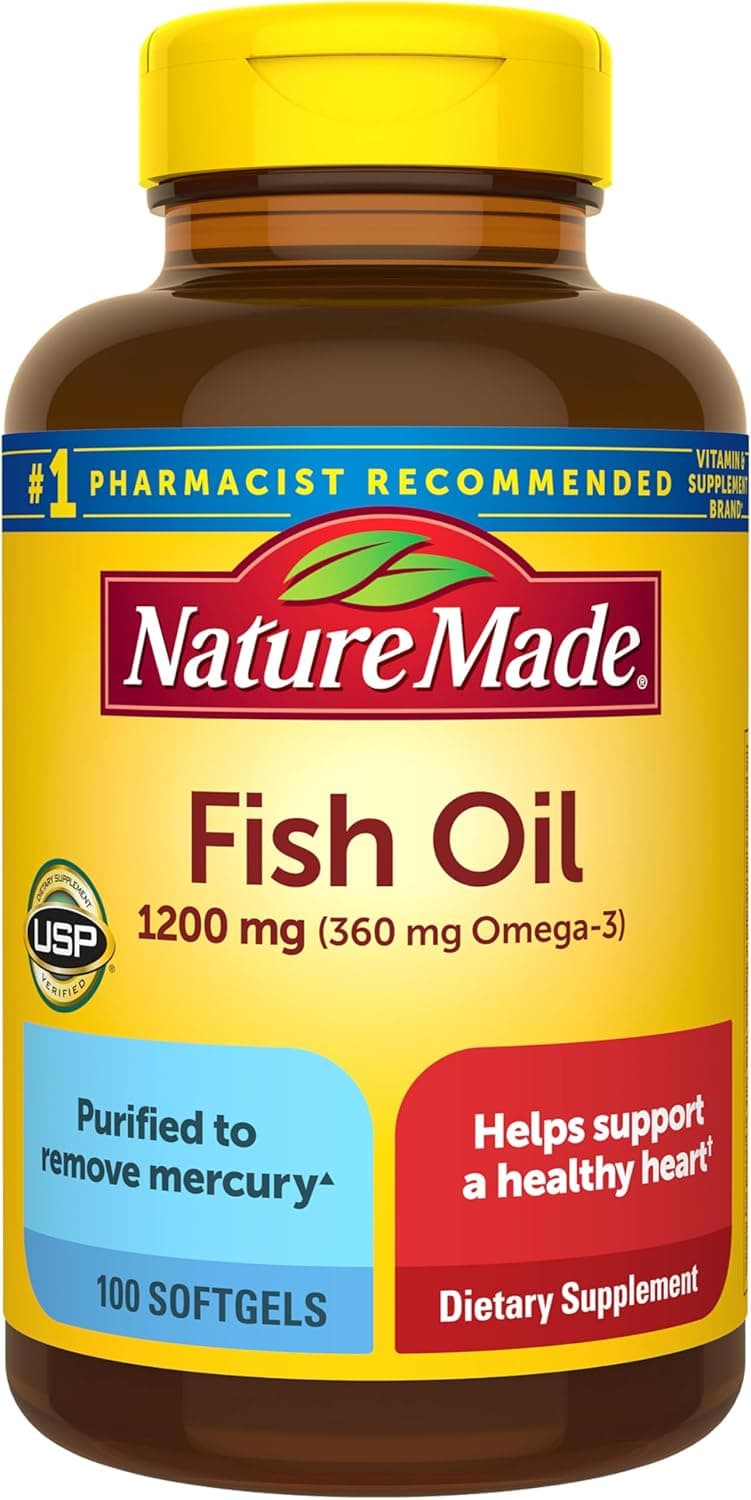
Nature Made Fish Oil 1,200 mg — Omega-3 Supplement for Heart Health, 100 Softgels
Fish oil remains one of the most common omega-3 supplements for people who do not eat fatty fish regularly. Softgels mask taste and are easy to travel with.
What stands out
- EPA/DHA content supports general omega-3 intake goals (check label for mg per serving).
- Pharmacist-familiar brand with consistent retail presence.
- Heart-health positioning aligns with mainstream wellness messaging—still prioritize diet quality.
Practical considerations
- Fish allergy and surgery timing (bleeding risk) are important discussion points with a clinician.
- Refrigeration may be recommended after opening depending on label.
Full review
Dietary supplements are not evaluated by the FDA for safety or efficacy in the same way as drugs. This long-form review is for general education only and is not medical advice, diagnosis, or treatment. Discuss any supplement with a qualified clinician, especially if you are pregnant, nursing, take prescription medications, or have a chronic condition.
Fish oil 1,200 mg labels versus EPA and DHA subtotals
Nature Made’s fish oil softgel is a mainstream way to increase marine omega-3 intake when fatty fish meals are infrequent. The front label’s large milligram number usually refers to total fish oil per serving, while cardiovascular and brain health discussions in research often hinge on the sum of EPA and DHA specifically. Comparing products requires reading Supplement Facts for those subtotals, not headline marketing. Softgels mask taste and reduce burp frequency for some users compared with liquid oils, though enteric coatings and taking with meals also influence tolerance.
Fish allergy and certain surgical planning scenarios change whether fish oil is appropriate at all; those determinations belong to clinicians.
Bleeding risk, procedure holds, and antiplatelet stacks
High-dose omega-3 supplements can matter for bleeding time conversations around procedures and when combined with antiplatelet medications. Always follow your surgical team’s instructions about holding supplements, which may differ from medication holds. Do not assume ‘natural’ equals risk-free.
If you develop easy bruising after starting fish oil, report it rather than doubling down.
Oxidation, smell, refrigeration, and summer shipping
Rancid oil smells sharply unpleasant and should not be consumed. Some households refrigerate after opening even if the label only recommends cool storage; avoid temperature swings that create condensation inside bottles. Summer mailbox deliveries can heat softgels; inspect texture.
Clear bottles versus opaque can matter for light exposure; store in original packaging when possible.
Environmental and dietary alternatives
Algae-based omega-3 products exist for people avoiding fish; this SKU is not that category. Pescatarian versus omnivore meal planning changes baseline intake. If you already eat salmon or mackerel twice weekly, your incremental benefit from moderate fish oil may differ from someone eating no marine foods.
Sustainability certifications vary; read brand statements if that drives your purchase.
Comparison with prescription omega-3 medications
Prescription icosapent ethyl and similar drugs are not the same as OTC fish oil; dosing and indications differ. Do not switch between them without medical supervision.
OTC products support general dietary gaps, not hospital protocols.
Disclaimer
Nutcor Lab does not treat lipid disorders. Educational text only.
Verify each purchase label against your health plan.
Burps, enteric coatings, and splitting doses across meals
Fish oil tolerability is partly social: fishy eructation after dinner meetings bothers some users more than biochemistry warrants. Taking oil with the largest meal, freezing capsules (if manufacturer allows), or switching meal timing can help without changing brands. Enteric-coated SKUs exist elsewhere; this Nature Made line is mainstream softgel positioning. If you need gram-level EPA/DHA for a cardiology conversation, count milligrams on the Supplement Facts sublines rather than assuming the 1,200 mg headline equals pure omega-3 mass.
Athletes combining fish oil with NSAIDs for joint aches should involve clinicians because bleeding and kidney risk conversations are dose- and duration-dependent.
Sustainability-minded buyers sometimes alternate canned sardine weeks with supplement weeks to diversify mercury exposure patterns and marine sourcing while still hitting omega targets discussed with dietitians.
If you coach youth sports, model reading Supplement Facts aloud so families learn to compare EPA and DHA subtotals instead of only trusting front-label fish cartoons.
Lipid clinics, apoB conversations, and fiber-first diets
Cardiology clinics increasingly discuss apoB and LDL particle metrics where fish oil is only one tile in a mosaic that includes statins, ezetimibe, and lifestyle. Soluble fiber from oats and beans lowers LDL modestly with fewer capsule burdens for some patients. If you take icosapent ethyl, this OTC fish oil is not interchangeable—never substitute silently.
Cold-water surfers sometimes discuss omega balance for joint comfort, yet wetsuit thickness and hypothermia risk matter more for safety than capsule counts when waves are overhead.