Multivitamin · Tablet
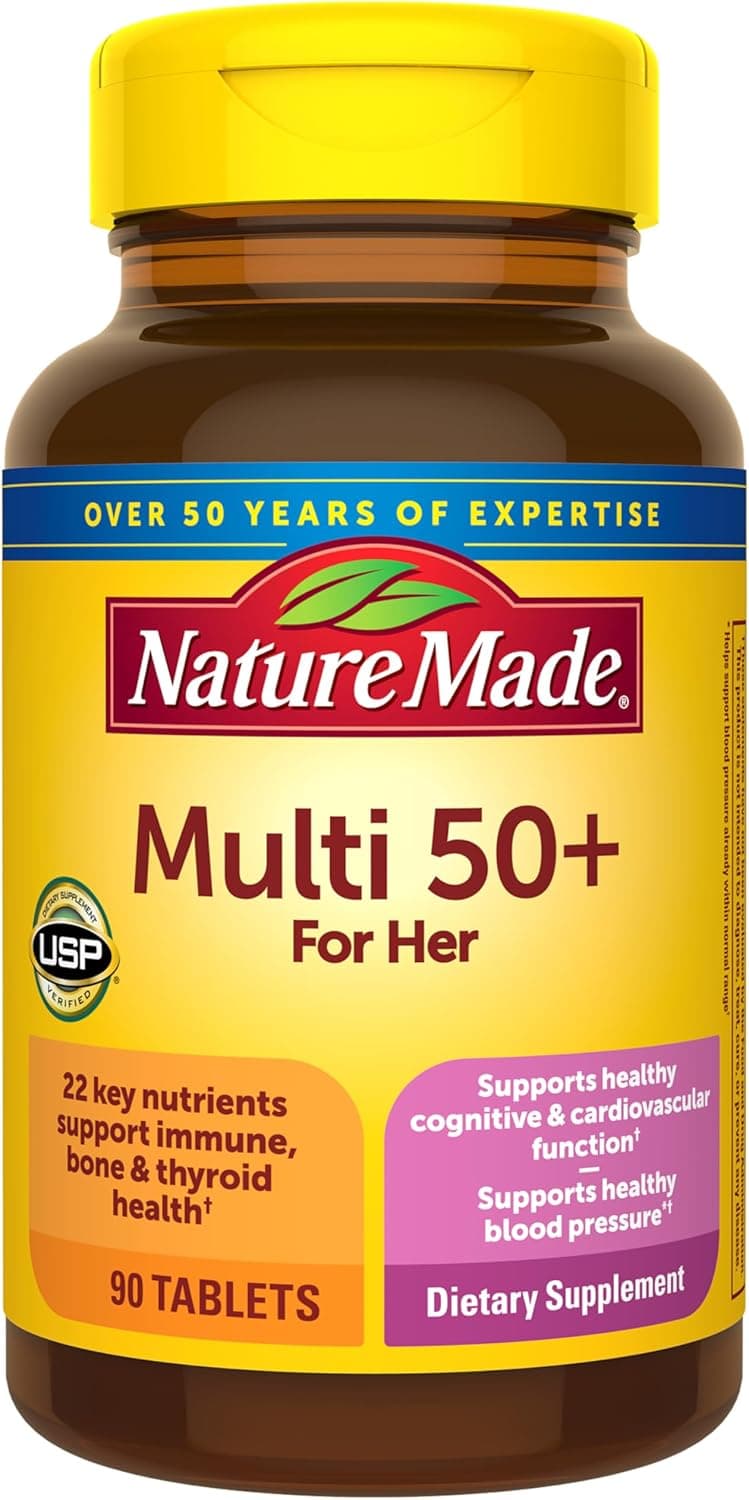
Nature Made Multivitamin For Women 50+ No Iron, Multivitamins for Women 50 Plus, Daily Nutritional Support, Nature Made Multi Vitamins, 90 Tablets, 90 Day Supply
A tablet multivitamin formulated without iron for women over 50, with adjusted vitamin D and B12 to reflect the nutrient shifts common after menopause. The 90-tablet count provides a three-month once-daily supply.
What stands out
- Iron removed—appropriate for post-menopausal women whose monthly iron losses have ceased.
- Emphasizes vitamin D and B12, two nutrients where absorption or needs commonly shift with age.
- Tablet format allows a more complete mineral panel than most gummy equivalents.
Practical considerations
- Calcium content in a single tablet is modest; diet and any separate calcium supplement should cover the remainder of daily needs.
- If you take a proton pump inhibitor, discuss B12 monitoring with your clinician—this multi can help but labs provide the real picture.
Full review
Dietary supplements are not evaluated by the FDA for safety or efficacy in the same way as drugs. This long-form review is for general education only and is not medical advice, diagnosis, or treatment. Discuss any supplement with a qualified clinician, especially if you are pregnant, nursing, take prescription medications, or have a chronic condition.
Women 50+: why this age group gets its own multi formula
Nature Made's 50+ women's tablet multi reflects formulation shifts that align with how nutritional needs evolve after menopause. The most visible changes from a standard women's multi are the removal of iron and the adjustment of calcium, vitamin D, and B12—three nutrients that become more clinically relevant with age for different reasons. After menopause, the accelerated iron losses of monthly cycles stop, and dietary iron from a mixed diet is generally sufficient for most women; the iron-free design avoids unnecessary accumulation in those who no longer need extra.
Vitamin D absorption efficiency declines with age, and calcium needs remain high for bone mineral density maintenance in the context of reduced estrogen. Vitamin B12 absorption can diminish as gastric acid production decreases over decades, making supplemental B12 in a crystalline form more reliably absorbed than food-bound B12 in some older adults. Formulas aimed at the 50+ segment typically account for these shifts by bumping relevant nutrients rather than simply relabeling a generic formula.
Calcium in a multivitamin: what you get and what you still need
A once-daily tablet can contain only a modest amount of calcium relative to what many bone health guidelines suggest for older women (1,000–1,200 mg/day from all sources combined). The reason is practical: calcium in meaningful quantities creates a large, dense tablet or requires splitting across multiple tablets. If this multi is your only supplement source of calcium, check the Supplement Facts on the live listing for the amount per tablet, then subtract how much you get from dairy, fortified plant milks, leafy greens, and other foods. Most women need additional calcium from diet even when taking a supplement.
Calcium timing can matter: split calcium across the day in portions under 500 mg to optimize absorption, and space it from iron supplements or iron-containing foods when maximizing both. Calcium carbonate absorbs better with food; calcium citrate forms (sometimes labeled as such) absorb adequately without food. Tablet multivitamins typically use carbonate because of manufacturing density.
B12 absorption, acid reducers, and the crystalline form advantage
Proton pump inhibitors and H2 blockers—commonly taken for acid reflux and GERD—reduce gastric acid, which is needed to liberate protein-bound B12 from food. Crystalline B12 in supplements does not require acid for absorption, which is why many geriatric nutrition guidelines suggest older adults meet at least some B12 needs through fortified foods or supplements rather than relying entirely on meat and eggs. If you take a PPI long-term, discuss B12 monitoring with your clinician; a tablet multi is a reasonable starting point for baseline coverage.
B12 status declines gradually and symptoms can be subtle—fatigue, neurological tingling, mood changes—and overlap with many other conditions of aging. Bloodwork (serum B12 and ideally methylmalonic acid) is more informative than supplementation history for assessing status.
No-iron rationale for the post-menopausal context
Iron accumulation in tissues is associated with oxidative stress mechanisms; unnecessary iron from a supplement adds to that burden in women who no longer need menstrual cycle replacement. Removing iron from the 50+ formula is one of the clearer evidence-aligned formulation decisions in this product category. However, women who have had recent gastrointestinal blood loss, iron-deficiency anemia confirmed by labs, or dietary patterns severely low in heme iron may still need additional iron under clinician guidance—a multi would not be the right vehicle for that.
Disclaimer
Nutcor Lab does not provide medical advice. This content is educational; bone health, hormonal changes, and micronutrient needs after menopause require individualized assessment by a licensed healthcare provider.
Supplements are not FDA-evaluated to prevent, treat, or cure disease. Always read the label on the listing you purchase, as formulations can change.