Specialty · Capsule
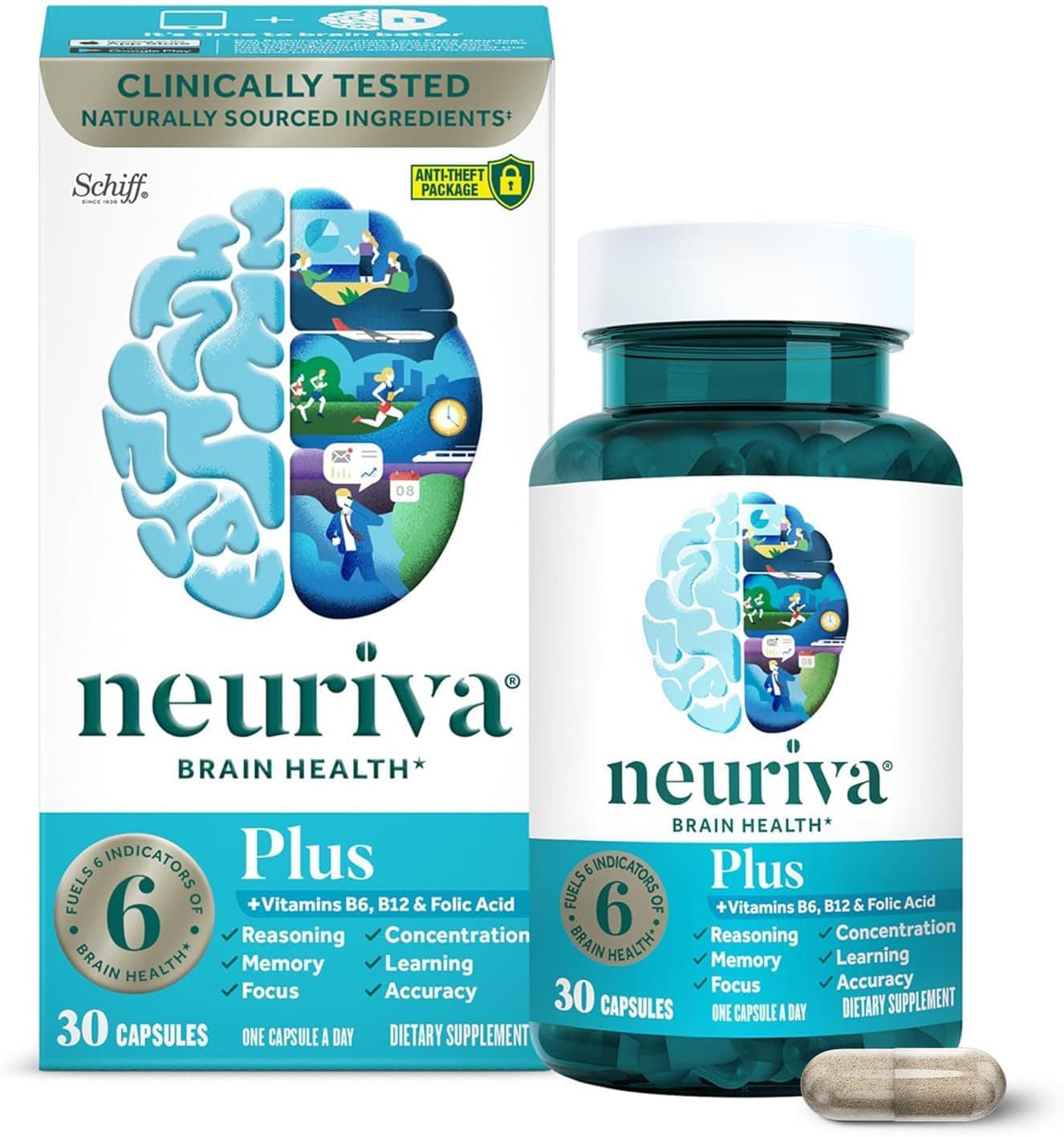
NEURIVA Plus — Brain Supplement for Memory, Focus & Concentration with Phosphatidylserine & Neurofactor, 30 Capsules
A nootropic-style blend marketed for cognitive performance support, combining phosphatidylserine with branded plant extracts and B vitamins. Useful for readers comparing mainstream “brain health” SKUs.
What stands out
- Phosphatidylserine is one of the better-studied ingredients in the cognitive supplement space (context-dependent).
- Compact 30-count bottle for monthly-style use.
- Clear structure/function labeling typical of this category.
Practical considerations
- Cognitive concerns deserve medical evaluation if symptoms are new or progressive.
- Ingredient overlap with other cholinergic or stimulant products should be avoided without guidance.
Full review
Dietary supplements are not evaluated by the FDA for safety or efficacy in the same way as drugs. This long-form review is for general education only and is not medical advice, diagnosis, or treatment. Discuss any supplement with a qualified clinician, especially if you are pregnant, nursing, take prescription medications, or have a chronic condition.
NEURIVA Plus as a mainstream “brain health” capsule
NEURIVA Plus packages phosphatidylserine alongside branded coffee-fruit neurofactor marketing and several B vitamins in a 30-capsule bottle aimed at adults who notice distraction, forgetfulness, or mental fatigue and want an over-the-counter alternative to unstructured internet nootropics. The category sits between true prescription cognitive evaluation and simple lifestyle habits such as sleep, aerobic exercise, and blood pressure control—which often explain subjective “brain fog” better than any capsule.
Phosphatidylserine is a phospholipid present in cell membranes; research interest has circled stress, exercise recovery, and older adult cognitive endpoints with mixed breadth depending on dose, population, and study quality. Treat marketing superlatives as hypotheses, not guarantees.
When memory problems deserve a clinic, not a bottle
New language problems, getting lost in familiar places, rapid personality change, or stepwise decline after strokes are red flags that require urgent evaluation—not supplement escalation. Even benign causes such as B12 deficiency, thyroid dysfunction, sleep apnea, depression, or medication anticholinergic burden can mimic cognitive decline and are fixable when identified.
If you are under sixty and suddenly cannot concentrate, also review caffeine, cannabis, alcohol, and anxiety before assuming a nootropic gap.
Overlap with cholinergics, stimulants, and sleep aids
Cognitive blends sometimes include ingredients that subtly interact with caffeine, ADHD medications, or sleep prescriptions. Even without obvious stimulants, subjective sedation or activation can occur idiosyncratically. If you stack multiple “focus” products, you may duplicate obscure botanicals at unknown purity.
A pharmacist medication review remains the fastest way to spot hazardous duplication.
Coffee fruit extract and proprietary blends
Branded neurofactor lines emphasize polyphenol stories from coffee cherry flesh rather than roasted beans. Polyphenols are plausible dietary contributors to vascular health, but translating a capsule back to measurable cognitive benefit for any one buyer is difficult outside controlled trials. Ask whether your money is better spent on sleep hygiene coaching or supervised exercise before long-term subscription.
Always compare the exact variant—NEURIVA has multiple tiers; ingredient lists differ.
B vitamins: useful context, not unlimited upside
B6, B9, and B12 participate in homocysteine-related biochemistry that cardiologists and neurologists sometimes monitor in specific patients. Supplementing without deficiency documentation rarely transforms cognition for otherwise replete adults, though correcting true deficiency can feel dramatic. High folic acid intake can mask B12 deficiency hematologically while neurological injury progresses—another reason unsupervised mega-stacking is unwise.
If you are vegan, malabsorptive, or post-bariatric, B12 monitoring belongs on a formal schedule, not guesswork.
Quality, expectations, and comparison shopping
Schiff-associated brands compete with prescription-adjacent memory clinics and with cheaper single-ingredient phosphatidylserine elsewhere online. Price per month and pill burden matter for adherence. Thirty capsules at one per day is a clean mental model; if the label says two, adjust cost accordingly.
Buy from reputable sellers to reduce counterfeit risk; photograph lot codes if reporting adverse events.
Nutcor Lab disclaimer
This article is educational and not a substitute for neurological or psychiatric care. Supplements are not intended to diagnose, treat, cure, or prevent disease.
Discuss new products with your clinician if you have seizures, bipolar disorder, or complex medication lists.
Workplace focus, caffeine ceilings, and sleep debt reality checks
Cognitive supplements cannot erase chronic sleep restriction. If you are below seven hours most nights, fixing sleep architecture delivers larger attention gains than adding phosphatidylserine. Caffeine timing also masks sleep debt; NEURIVA is not a license to double espresso indefinitely. Students pulling all-nighters should prioritize scheduling and breaks over stacking nootropics that lack exam-outcome evidence.
If you recently started an SSRI, SNRI, or bupropion, subjective focus may fluctuate for weeks; do not attribute every change to a capsule you added the same month.
Office ergonomics, monitor distance, and blue-light hygiene interact with perceived eye strain and concentration; supplements rarely substitute for optometry updates when vision drifts.