Single nutrients · Veg capsule
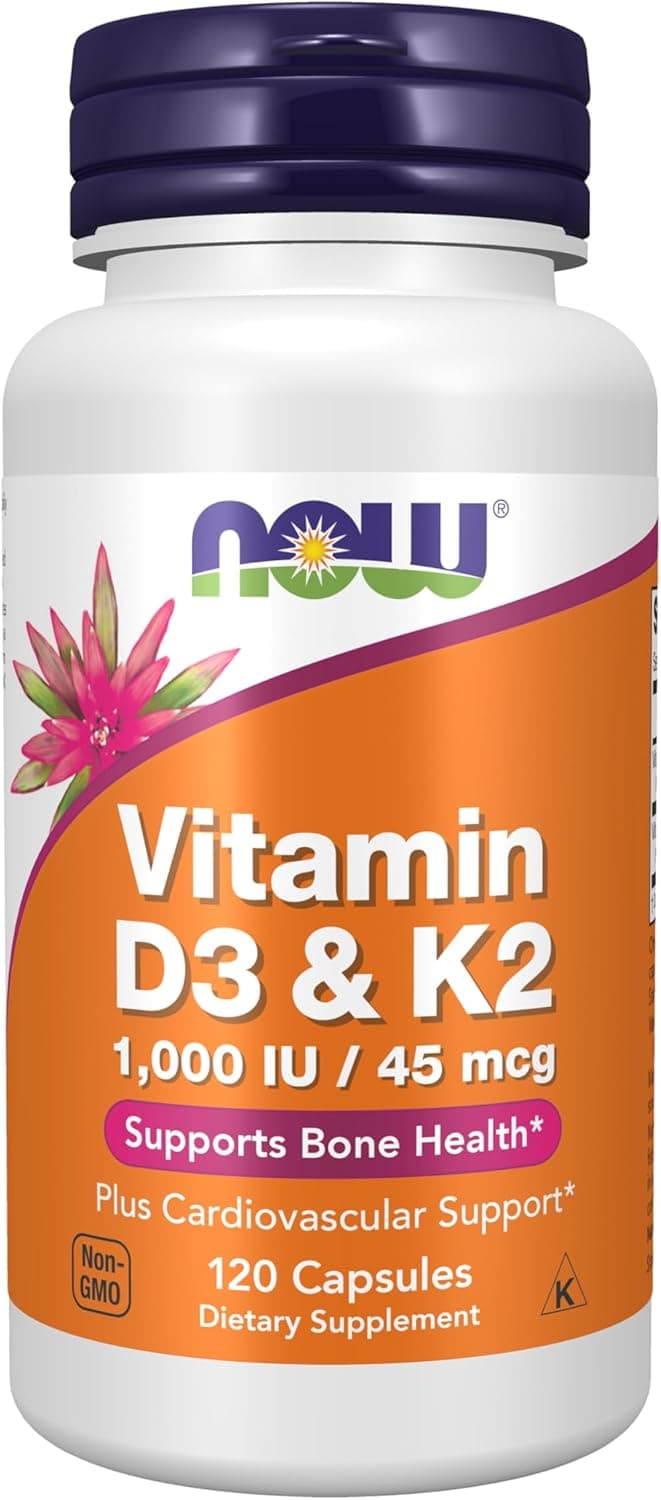
NOW Vitamin D-3 & K-2 — 1,000 IU / 45 mcg, Cardiovascular & Bone Support, 120 Veg Capsules
Pairs vitamin D3 with K2, a combination popular for bone and calcium-direction discussions. Useful when you want both fat-soluble vitamins in one capsule instead of separate bottles.
What stands out
- Moderate D3 dose (1,000 IU) can be easier to combine with other products than ultra-high potencies.
- K2 as MK-7 is a common form in combination products.
- Vegetarian capsules appeal to plant-forward households.
Practical considerations
- Vitamin K matters for people on warfarin or similar anticoagulants—medical guidance required.
- Assess total vitamin D from diet, sun, and all supplements to avoid excess.
Full review
Dietary supplements are not evaluated by the FDA for safety or efficacy in the same way as drugs. This long-form review is for general education only and is not medical advice, diagnosis, or treatment. Discuss any supplement with a qualified clinician, especially if you are pregnant, nursing, take prescription medications, or have a chronic condition.
Why vitamin D3 and K2 are sold together in one capsule
NOW’s combination pairs cholecalciferol (D3) with vitamin K2, a fat-soluble nutrient family that includes multiple forms such as MK-4 and MK-7 depending on labeling and sourcing. Marketing often highlights bone and cardiovascular framing language; physiologically, both vitamins participate in broader calcium-handling conversations that specialists—not retail pages—should personalize. This SKU uses a moderate D3 dose relative to prescription megadoses, which can be easier to combine with other products without immediately overshooting unless you stack carelessly.
Vegetarian capsules appeal to households avoiding gelatin from bovine or porcine sources, though excipients still deserve label review for individual ethics.
Anticoagulant caution is non-negotiable
Patients on warfarin or related vitamin K–sensitive anticoagulation regimens must coordinate any vitamin K intake changes with prescribers. Randomly adding K2 because an influencer praised it can destabilize INR control. This point is not optional fine print; it is central counseling.
If you are not on such medications, K2 still deserves totals awareness if you take multivitamins or greens powders that also contain K forms.
Summing vitamin D from sun, food, and stacks
Vitamin D is fat-soluble, meaning excess can accumulate over time compared with water-soluble vitamins that are more readily excreted at high intakes. Add prescription D, fortified milk, cod liver oil traditions, and any multi before judging this capsule’s incremental effect. Some clinicians prefer lab-guided dosing rather than guesswork shopping.
Kidney disease changes activation steps of vitamin D metabolism; unsupervised high doses are inappropriate in that context.
Comparison with standalone D or standalone K products
Combination capsules reduce pill count when both nutrients are desired. If you only need D, a combo forces K you may not want; if you only need K guidance from a clinician, a D-heavy combo may be wrong. Splitting purchases into singles can be cheaper per nutrient but raises adherence burden.
Travelers sometimes prefer combos to shrink pill organizers.
NOW manufacturing context and marketplace hygiene
NOW publishes extensive SKUs; always verify the exact bottle matches the ASIN you clicked. Heat exposure in shipping is rarely ideal for oil-soluble capsules; inspect for leakage or clumping. Keep silica packets if provided.
Report quality concerns with lot numbers.
Editorial limitations
Nutcor Lab does not interpret labs or adjust anticoagulation. This article is educational.
Seek professional advice for medication interactions.
Seasonal sun exposure, latitude, and when combo capsules help
Northern winter office workers often discuss vitamin D supplementation with clinicians after labs; adding K2 simultaneously appeals to people who read calcium-direction narratives online. Yet latitude, skin pigmentation, outdoor time, and baseline diet change the marginal benefit of any fixed dose like 1,000 IU D3. Summer athletes who train shirtless may need less supplemental D than winter shift workers; blind year-round megadosing ignores that variability.
If you take bile acid sequestrants or orlistat, fat-soluble vitamin absorption may fall—another reason personalization beats catalog prose.
Rotate bottles through your pantry first-in-first-out so capsules near expiration do not accumulate behind newer impulse purchases from holiday sales.
If you photograph bottles for insurance home inventories, vitamin D plus K combos deserve their own shelf photo because fire claims sometimes ask for proof of expensive supplement losses.
Bone density scans, fall risk, and winter ice traction
DEXA scheduling sometimes aligns with vitamin D repletion discussions, yet K2 marketing should not delay balance training after a first fragility fracture. Yaktrax-style traction aids on boots reduce falls more cheaply than supplement stacks. If you take bile acid sequestrants, fat-soluble vitamin absorption checks belong on your clinician’s radar independent of retail combo convenience.
Open-water swimmers who train year-round sometimes overshoot vitamin D synthesis in sunny months while still swallowing winter doses from habit—seasonal lab checks prevent silent stacking that no K2 narrative alone can justify.