Eye health · Softgel
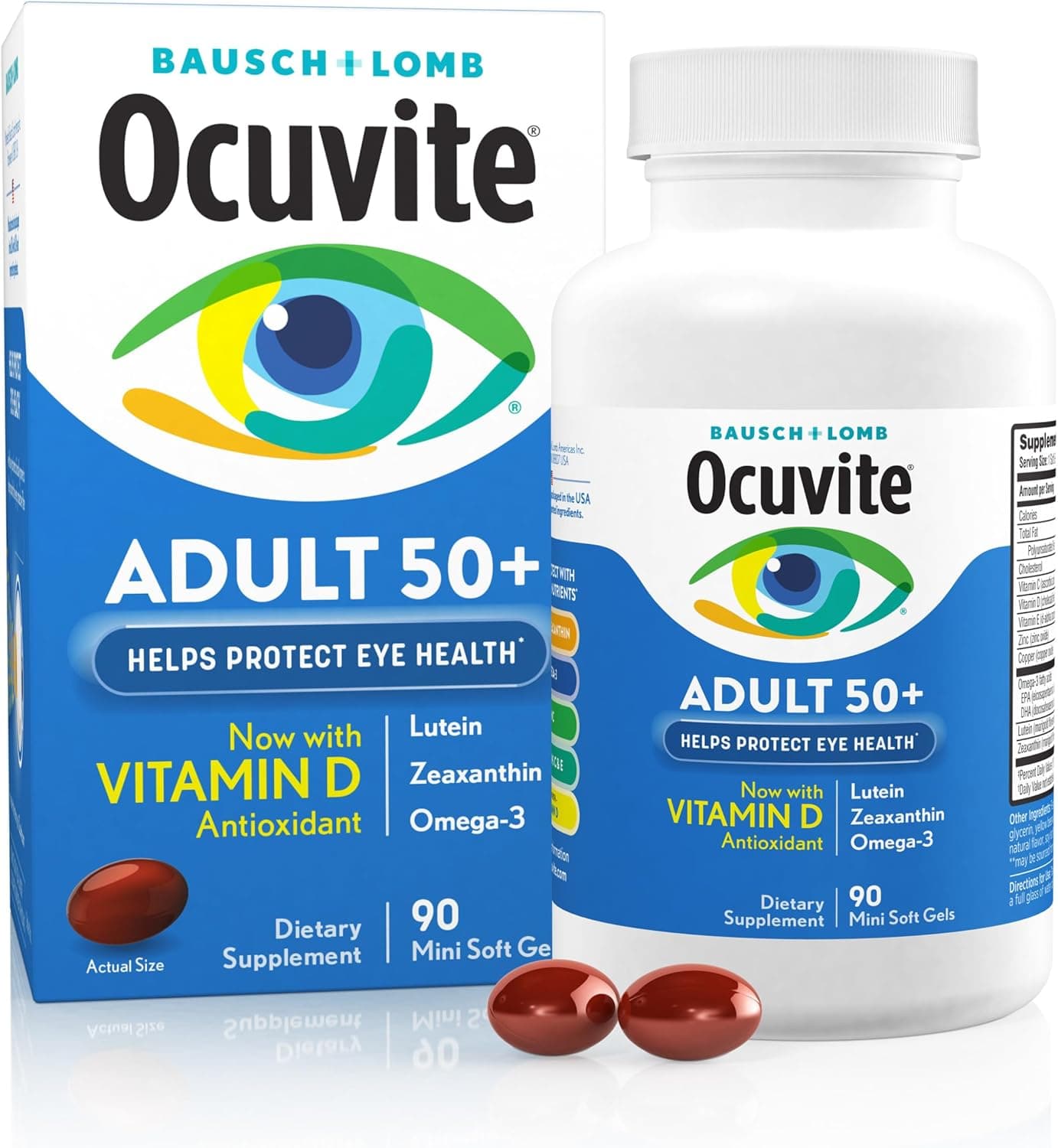
Ocuvite 50+ Eye Vitamin & Mineral — Omega-3, Zinc, Vitamins C & E, Lutein & Zeaxanthin, 90 Softgels
An eye-focused multivitamin/mineral with lutein, zeaxanthin, and omega-3s—ingredients commonly discussed for macular pigment and general ocular nutrition in aging adults.
What stands out
- Combines antioxidants (C, E) with zinc in an AREDS-adjacent conversation (this SKU is not a substitute for prescribed AREDS unless your eye doctor agrees).
- Lutein/zeaxanthin support dietary gaps for people with low leafy-green intake.
- Softgel delivery can bundle oil-soluble nutrients efficiently.
Practical considerations
- Eye disease management requires an ophthalmologist; supplements are supportive only.
- Multiple softgels per day may be required—check serving size.
Full review
Dietary supplements are not evaluated by the FDA for safety or efficacy in the same way as drugs. This long-form review is for general education only and is not medical advice, diagnosis, or treatment. Discuss any supplement with a qualified clinician, especially if you are pregnant, nursing, take prescription medications, or have a chronic condition.
Ocuvite 50+ as an AREDS-adjacent conversation starter
Bausch + Lomb’s Ocuvite line for adults fifty and older bundles lutein, zeaxanthin, zinc, antioxidant vitamins C and E, and omega-3 fatty acids into softgels aimed at people who want ocular nutrition beyond what a casual multivitamin might emphasize. This is explicitly not interchangeable with PreserVision AREDS2 unless your ophthalmologist maps the nutrient doses to your retinal diagnosis and agrees substitution is appropriate, because AREDS formulations follow specific trial compositions that differ by SKU and revision.
Macular pigment density discussions often mention lutein and zeaxanthin from leafy greens and eggs; supplements attempt to fill dietary gaps when those foods are scarce or when specialists layer them onto broader plans.
Omega-3s inside an eye formula: practical pros and cons
Adding fish oil–class lipids to an eye softgel reduces bottle count for users who would otherwise buy separate marine omega-3 products. The tradeoff is dose: eye-focused softgels may carry modest EPA/DHA totals compared with cardiovascular-focused fish oil bottles, so summing your omegas across all products still matters if you track lipids with a clinician.
Fish or shellfish allergy, upcoming surgery, or anticoagulant regimens can change whether any marine lipid supplement belongs in your stack.
Zinc, copper balance, and mineral timing
High-zinc formulations echo AREDS-era mineral logic where copper was included to reduce theoretical imbalance risk during prolonged zinc intake at study-like levels. Not every consumer needs that architecture; some multis already add zinc, creating duplication that gastrointestinal tracts notice before any theoretical eye benefit accrues.
Minerals can interfere with levothyroxine, fluoroquinolone antibiotics, and bisphosphonates unless spaced per pharmacy guidance.
Serving size, softgel burden, and tolerability
Eye softgels are often not tiny; users with dysphagia should practice safe swallowing techniques or ask clinicians about alternative AREDS strategies rather than crushing enteric systems not designed for it. Taking with meals can reduce reflux and improve fat-soluble vitamin absorption.
If you develop fishy burps severe enough to disrupt sleep, timing earlier in the day or discussing alternatives with an eye provider beats abandoning eye follow-up entirely.
Differentiation from general multis and beauty blends
Hair-skin-nail biotin bombs are a different category from ocular mineral stacks. Likewise, standard Centrum-style multis spread doses thinly across the whole body; Ocuvite concentrates on a narrower panel at higher eye-relevant potencies in some lines. Read labels rather than assuming interchangeability because bottles share a shelf in the pharmacy.
Diabetics need retinal exams on schedule regardless of supplements.
Lifestyle pillars that dwarf any bottle
UV protection with quality sunglasses, smoking cessation, blood pressure control, and glycemic management remain foundational for many retinal diseases. Supplements ride on top of those behaviors, not instead of them.
Digital eye strain from screen time is rarely solved by macular carotenoids alone; ergonomics and breaks matter.
Disclaimer
Nutcor Lab does not prescribe AREDS therapy. This content is informational; eye disease requires board-certified ophthalmology care.
Supplements are not FDA-evaluated to prevent vision loss.
Dry eye overlap, contact lenses, and when carotenoids are not the fix
Many adults conflate screen-related dryness with macular disease anxiety. Artificial tear routines, lid hygiene, and humidity control often change comfort faster than oral carotenoid stacks. Contact lens wearers must follow lens solution rules; supplements do not sterilize cases. If you have autoimmune sicca syndromes, rheumatology-directed care matters more than retail eye vitamins.
Pilots and night drivers should still prioritize clean windshields and updated glasses prescriptions rather than hoping lutein sharpens glare recovery.
When comparing Ocuvite SKUs across retailers, screenshot Supplement Facts because minigel versus softgel naming can confuse household members who refill pill organizers for parents.
Cost-sharing, FSA receipts, and sibling caregivers
Flexible spending accounts sometimes reimburse eye vitamins with a letter of medical necessity from ophthalmology; keep itemized receipts rather than vague credit card statements. If siblings rotate caregiving for aging parents, align one shared spreadsheet of bottle lot numbers so everyone knows which month a refill shipped.