Eye health · Softgel
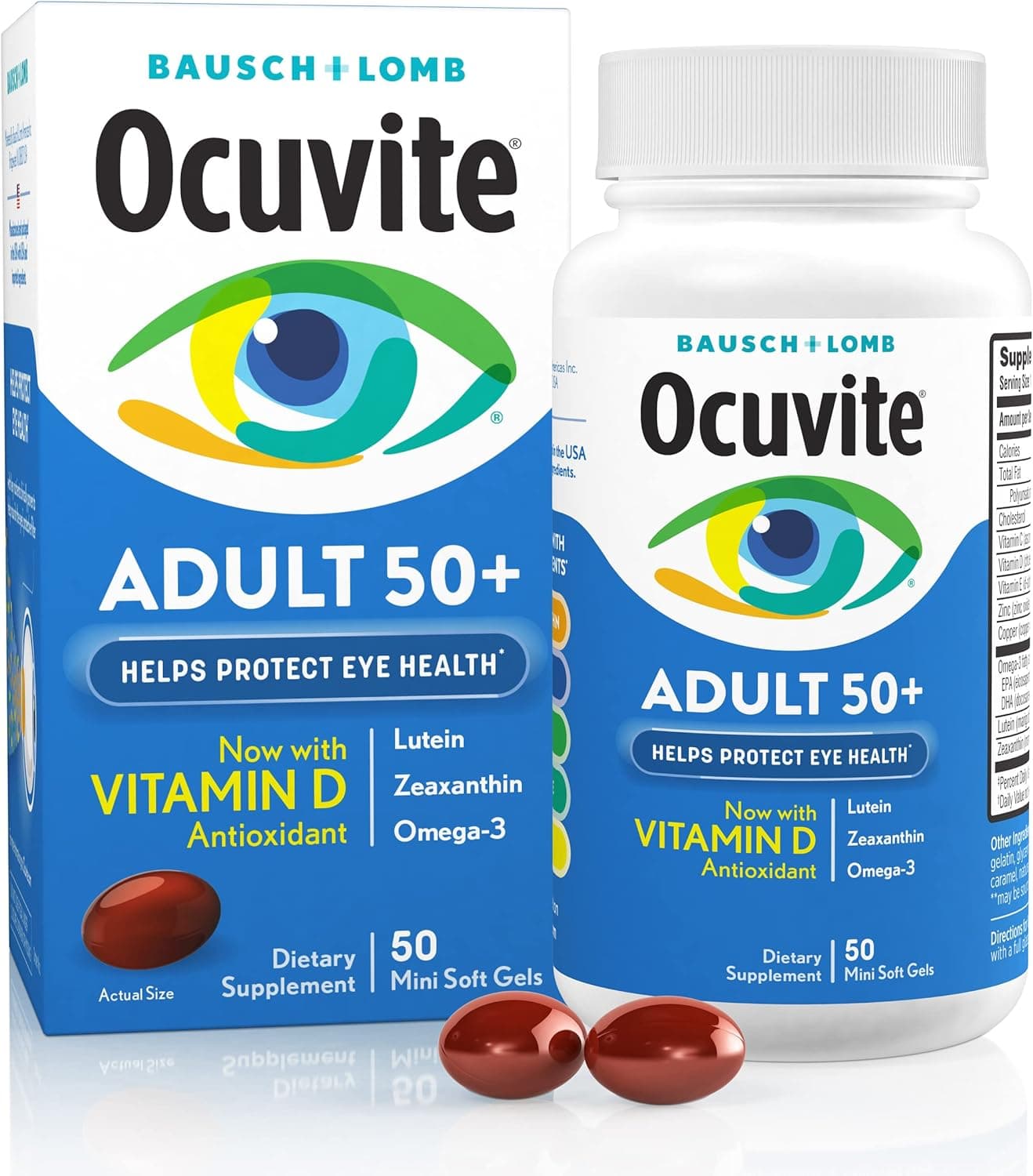
Ocuvite 50+ Eye Vitamin & Mineral Supplement, Multivitamin for Vision & Ocular Health with Omega-3, Zinc, Vitamins C & E, Lutein & Zeaxanthin, Zinc Supplements for Women and Men, 50 Softgels
Bausch + Lomb's Ocuvite 50+ eye vitamin bundles lutein, zeaxanthin, zinc, vitamins C and E, and omega-3 fatty acids for adults seeking broad ocular nutritional support. Not a direct AREDS 2 equivalent—confirm with your ophthalmologist if an AREDS protocol is indicated.
What stands out
- Adds omega-3 to the eye-nutrient stack, reducing the need for a separate fish oil bottle.
- Zinc and copper pairing mirrors AREDS-era mineral design logic.
- Aimed at adults 50+ who want eye health support beyond a standard multivitamin.
Practical considerations
- Omega-3 dose is smaller than dedicated fish oil supplements—track totals if a specific EPA/DHA target applies.
- Not interchangeable with PreserVision AREDS 2 without ophthalmologist confirmation of dose equivalence.
Full review
Dietary supplements are not evaluated by the FDA for safety or efficacy in the same way as drugs. This long-form review is for general education only and is not medical advice, diagnosis, or treatment. Discuss any supplement with a qualified clinician, especially if you are pregnant, nursing, take prescription medications, or have a chronic condition.
Ocuvite 50+: positioning within the eye vitamin landscape
Ocuvite 50+ is Bausch + Lomb's broadened eye vitamin for older adults, combining lutein, zeaxanthin, zinc, antioxidant vitamins C and E, and omega-3 fatty acids. It differs from PreserVision AREDS 2 in formulation composition and is not interchangeable as an AREDS-protocol supplement unless your ophthalmologist reviews the Supplement Facts and confirms equivalence for your specific clinical situation. Ocuvite markets more broadly toward adults who want ocular nutritional support without necessarily having a diagnosed retinal condition—the positioning is general eye wellness rather than AREDS adherence.
This distinction matters both for expectation-setting and for conversations with your eye doctor. If you received a recommendation to take 'AREDS supplements,' the specific nutrient amounts in the clinical trial matter; a product with some overlapping ingredients is not automatically the correct substitution. If you are simply interested in supporting eye health as part of an aging wellness routine, Ocuvite 50+ is in the category you are browsing.
Omega-3 fatty acids inside an eye softgel
Including EPA and DHA in an eye supplement reduces the number of separate bottles for adults who would otherwise also take a fish oil capsule. The practical tradeoff is dose: the omega-3 content in an eye-focused softgel is typically smaller than what cardiovascular-focused fish oil supplements deliver. If your clinician wants you at a specific EPA+DHA target for lipid management, the contribution from Ocuvite 50+ may cover only part of that goal. Sum omega-3s across all products before concluding you are at your intended intake.
Fish oil in any form can interact with anticoagulant medications at high doses, can cause GI discomfort in some users, and should be discussed with a surgeon if you are scheduled for a procedure. These points apply regardless of whether the omega-3 arrives in a dedicated fish oil capsule or embedded in an eye supplement.
Lutein and zeaxanthin at 50+
Macular pigment density—which lutein and zeaxanthin contribute to—tends to decline with age, and dietary intake from leafy greens and eggs varies significantly by food preference. Adults over 50 who dislike kale, spinach, and egg yolks are less likely to reach the lutein and zeaxanthin intake levels studied in research populations. A supplemental source can partially compensate, though blood levels depend on baseline diet, body composition, and absorption variation. Lab testing of carotenoid levels is not routine in most clinical settings; ophthalmologic imaging can sometimes provide indirect insight into macular pigment status.
Zinc and copper balance, revisited
Zinc in eye vitamin formulas reflects AREDS trial design thinking, where high zinc (as oxide) was part of the nutrient combination. Copper is typically paired with zinc in these products because long-term high-zinc intake can suppress copper absorption, potentially inducing deficiency. Check cumulative zinc across any other supplements you take—multivitamins, immune support products, and cold lozenges all contribute—so your pharmacist can flag any duplication that pushes well beyond typical adequate intake ranges.
Timing zinc around certain antibiotics (quinolones, tetracyclines) and bisphosphonates is standard guidance; a two-hour separation is often recommended to minimize absorption interference.
Practical logistics for the 50-softgel bottle
Fifty softgels at one daily is approximately a seven-week supply, shorter than many consumers expect. If you are incorporating this into a long-term routine, planning reorder timing avoids gaps. Softgels are generally better tolerated with food due to the fat-soluble vitamin content; taking with dinner rather than mid-afternoon on an empty stomach suits many users. Store in a cool, dry location—kitchen cabinets away from the stove are better than bathroom medicine cabinets.
As always with any supplement changing hands between caregivers, a shared note with lot number and purchase date helps ensure the right bottle reaches the right person, especially in households managing multiple people's supplement regimens.
Disclaimer
Nutcor Lab does not prescribe eye vitamin therapy. This content is educational; age-related eye conditions require diagnosis and management by a licensed ophthalmologist.
Supplements are not FDA-evaluated to prevent vision loss. Always read the Supplement Facts on the live listing, as formulations may change.