Sleep & stress · Gummy
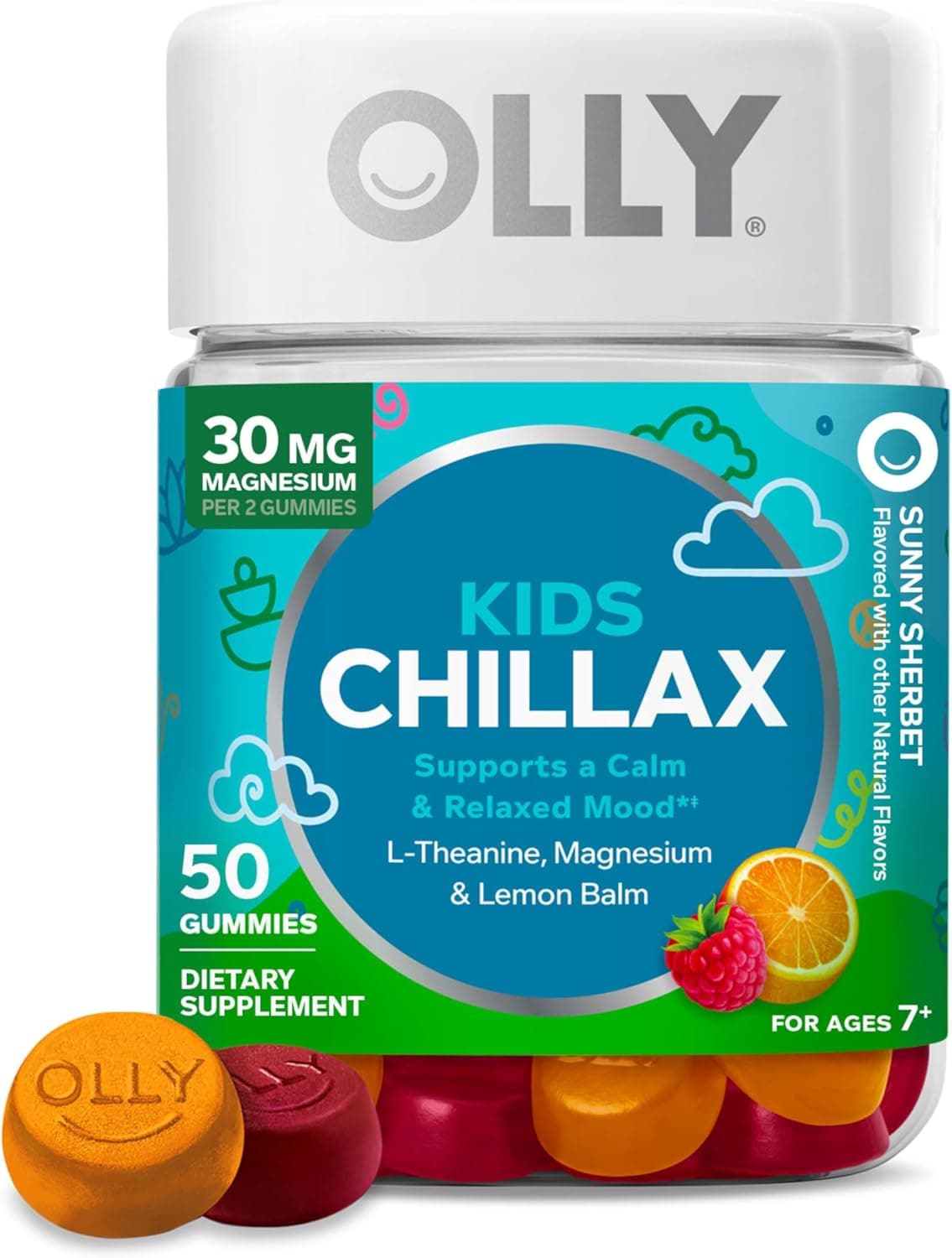
OLLY Kids Chillax Gummy, For a Calm and Relaxed Mood*, Magnesium, L-Theanine, Lemon Balm Extract, Chewable Supplement, Sherbet Flavored, 25 Day Supply - 50 Count (Packaging May Vary)
A children's calming gummy combining magnesium, L-theanine, and lemon balm extract in a sherbet-flavored chewable. Positioned for occasional mild stress or restlessness support in kids—not a treatment for anxiety or behavioral diagnoses.
What stands out
- Combines three complementary calming ingredients in a child-friendly format.
- Sherbet flavor designed to improve daily supplement adherence for children.
- 25-day supply at labeled serving; short trial cycle makes it easy to assess effect.
Practical considerations
- Consult your child's pediatrician before starting, especially if the child takes any medications.
- Not a substitute for behavioral strategies, sleep hygiene adjustments, or specialist evaluation when needed.
Full review
Dietary supplements are not evaluated by the FDA for safety or efficacy in the same way as drugs. This long-form review is for general education only and is not medical advice, diagnosis, or treatment. Discuss any supplement with a qualified clinician, especially if you are pregnant, nursing, take prescription medications, or have a chronic condition.
OLLY Kids Chillax: what's inside and why parents consider it
OLLY Kids Chillax gummies combine magnesium, L-theanine, and lemon balm extract in a chewable format aimed at parents looking for non-prescription calming support for children experiencing occasional stress, restlessness, or difficulty settling. The sherbet flavor and gummy texture are deliberately child-friendly to improve consistency over adult capsules or tablets, which many kids refuse. This is a dietary supplement, not a medication, and the intended context is mild, situational support—not treatment of anxiety disorders, ADHD, behavioral diagnoses, or sleep pathology.
Before purchasing, parents should know their child's weight, age, and any concurrent medications. Dosing for children in the supplement category is far less studied than pharmaceutical pediatric dosing, and the 'children's supplement' label on a product does not mean the dose has been clinically validated for the specific pediatric age range printed on the box. Reading the label for the manufacturer's recommended age cutoff and serving size is the first step; the second is confirming with the child's pediatrician.
Magnesium in children: context and plausible mechanism
Magnesium is involved in hundreds of enzymatic reactions including those related to the nervous system; children's intake from whole foods like nuts, seeds, legumes, and green vegetables varies widely by diet. A gummy delivering a modest magnesium dose can complement dietary intake when a child's food variety is narrow—common among picky eaters. However, excess magnesium from supplements is primarily a gastrointestinal issue (loose stools, cramping) rather than a serious toxicity risk at typical supplement doses, so the margin for error is more forgiving than with fat-soluble vitamins or heavy metals.
Magnesium glycinate and malate forms are noted for tolerability, while magnesium oxide is absorbed less efficiently. Gummy formats may use different forms; check the Supplement Facts for the specific magnesium compound listed rather than assuming the form from the marketing description.
L-theanine: evidence, mechanism, and realistic expectations
L-theanine is an amino acid naturally occurring in green tea, associated in some small adult studies with promoting a relaxed but alert mental state without sedation. Research in pediatric populations is limited, and the mechanism—modulation of alpha brain wave activity and interaction with GABA and glutamate pathways—has been proposed but not conclusively proven at typical supplement doses in children. Parents who try it often describe a subtle 'take the edge off' effect during high-stimulation periods rather than a dramatic pharmaceutical calming response. Setting that expectation prevents both over-reliance on the supplement and premature abandonment after a single trial.
Lemon balm extract: traditional use and cautions
Lemon balm (Melissa officinalis) has a long history in European herbal medicine as a mild nervine used in both adults and children. Small trials in children have explored its combination with other botanicals for sleep and restlessness, though study sizes are modest and methodology varies. The safety profile at standard supplement doses in healthy children is generally considered favorable by researchers who have reviewed the literature, but interaction with thyroid medications and sedative drugs has been noted in adult contexts and should prompt a pharmacist check if the child is on any regular prescription.
Pediatric supplement use: important framework for parents
Pediatricians often prefer that parents address childhood anxiety, sleep difficulties, or behavioral concerns through behavioral strategies, sleep hygiene adjustments, and when necessary, specialist referral before reaching for supplements. Supplements occupy a regulatory space where the evidentiary bar is lower than prescription medications, so products can be marketed without the clinical trial data a pharmaceutical product would require. That is not a reason to panic about a gummy your child enjoys, but it is context for understanding that a pediatrician's endorsement after reviewing your specific child's history is more informative than any product review.
If your child has an underlying condition, takes medications, or has food allergies, the ingredient list deserves careful reading before first use. Chilling gummies in the refrigerator helps with texture in warm climates and reduces the risk of gummies melting into a sticky mass that is harder to serve accurately.
Disclaimer
Nutcor Lab does not provide medical or pediatric advice. This content is educational; childhood anxiety, behavioral concerns, and sleep disorders require evaluation by a licensed pediatrician or child specialist.
Supplements are not FDA-evaluated to prevent, treat, or cure disease. Consult your child's doctor before starting any supplement routine.