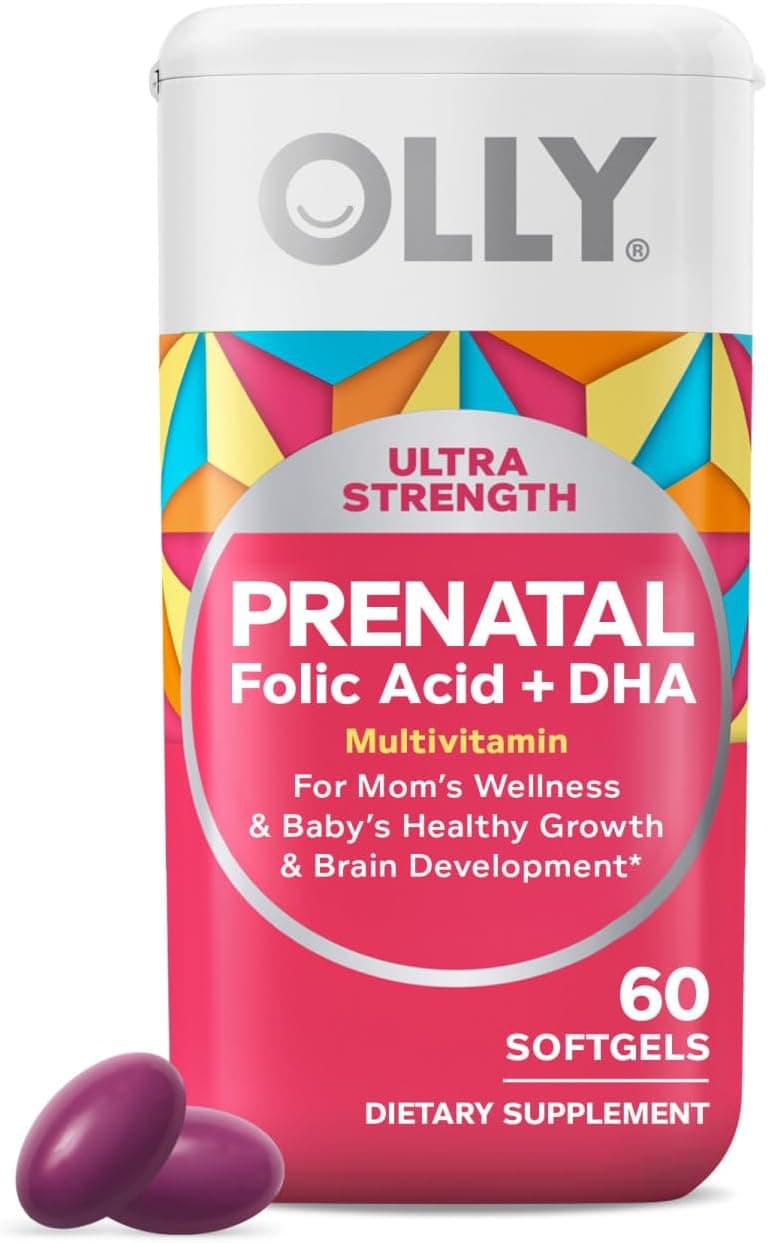
Prenatal · Softgel
OLLY Ultra Strength Prenatal Softgels — Folic Acid, DHA, Iron, Vitamins B, C, D & E, 60 Count
Higher-tier OLLY prenatal in softgel form with iron and DHA—closer to traditional prenatal tablet coverage while keeping brand positioning. Good option if gummies do not meet nutrient targets.
What stands out
- Ultra line typically increases potencies versus gummy counterparts—compare facts panels.
- Softgels bundle oil-soluble DHA with minerals and vitamins.
- 30-day supply at two softgels daily (confirm label).
Practical considerations
- Iron can worsen nausea for some—timing with food may help.
- Obstetric provider should approve any prenatal switch.
Full review
Dietary supplements are not evaluated by the FDA for safety or efficacy in the same way as drugs. This long-form review is for general education only and is not medical advice, diagnosis, or treatment. Discuss any supplement with a qualified clinician, especially if you are pregnant, nursing, take prescription medications, or have a chronic condition.
OLLY Ultra Strength Prenatal softgels: bridging gummies and clinical completeness
OLLY’s Ultra Strength Prenatal softgel line attempts to deliver higher potencies than gummy prenatals while retaining the brand’s approachable aesthetic—iron, DHA, folic acid, and a broad vitamin panel in oil-based softgels that bundle fat-soluble nutrients more naturally than pressed tablets alone. Sixty softgels often imply a thirty-day supply at two per day, but never assume; prenatal serving sizes change outcomes dramatically for choline, iodine, and DHA milligrams.
Softgels still trigger reflux in some first-trimester patients; timing with largest meal sometimes helps more than brand switching.
Iron in prenatals: benefit versus nausea trade space
Iron supports expansion of red cell mass during pregnancy but worsens nausea for a subset of users. Splitting doses, switching salts, or using alternate-day protocols are clinician conversations—not DIY elimination unless directed. Constipation remains common; hydration and fiber help within safe limits.
If iron is omitted from a different SKU, deficiency risk rises—track ferritin trends.
DHA and mercury-risk mythology
DHA supports fetal brain development narratives grounded in population nutrition science, though exact supplemental gram targets vary by guideline committee. Purified fish oil reduces mercury concern versus whole predatory fish meals, but fish-allergic patients need label scrutiny or algae alternatives elsewhere.
Flaxseed ALA is not a substitute for preformed DHA at biochemically equivalent doses.
Choline, iodine, and the label fine print
Modern obstetric discussions increasingly mention choline alongside folate; not every prenatal meets newer choline enthusiasm. Iodine matters for thyroid function during pregnancy; kelp-based iodine is erratic dosing. Read micrograms carefully and ask your provider to align totals with your prenatal vitamin prescription if you have thyroid disease.
Vitamin A forms and totals still deserve scrutiny in multis plus diet.
Comparison with Nature Made prenatal softgels and OLLY gummy prenatal
Nature Made’s prenatal in our catalog emphasizes pharmacy-channel trust; OLLY Ultra leans lifestyle branding with similar functional intent. Gummy OLLY prenatal may underdose iron; Ultra softgels try to close that gap.
Switching brands mid-pregnancy is fine if doses reconcile—bring labels to appointments.
Postpartum and lactation carryover
Some clinicians continue prenatals during breastfeeding for nutrient continuity; others transition to targeted iron or DHA alone. Supply-chain fish burps may worsen sleep-deprived nausea—practical detail new parents notice immediately.
Partners should not take prenatal iron products casually; iron is not a general tonic.
Disclaimer
Nutcor Lab does not practice obstetrics. Supplements are not FDA-approved to prevent pregnancy complications.
Always follow your midwife or physician’s formulary guidance.
Softgel size, reflux, and twin-pack household logistics
Some users swallow two medium softgels easier than one giant prenatal tablet, yet total oil volume can still trigger reflux when lying down immediately after dosing. Sit upright thirty minutes when possible. Twin-pack listings tempt stockpiling; confirm expiration before buying a year of supply you may not finish if nausea forces brand switches.
If you develop pruritic cholestasis of pregnancy, every supplement gets re-reviewed urgently—do not autopilot.
Partners supporting midnight feeds should label their own vitamins distinctly from maternal prenatals to avoid accidental iron loading in non-pregnant adults.
Twin pregnancies, cholestasis labs, and pharmacy delivery heat
Twin gestations alter iron and folate needs faster than singleton templates; obstetrics should drive changes, not Amazon subscribe-and-save defaults. Mail-order summer deliveries can cook car-seat softgels left on porches—request hold-for-pickup when possible. If cholestasis labs rise, every pill including DHA sources gets reviewed the same week symptoms appear.
NICU parents juggling pumping schedules should not stash extra prenatal softgels in glove boxes where summer heat degrades oil matrices.
Lactation consultants sometimes suggest choline-rich foods before extra capsules when supply questions arise, because whole-food patterns support overall postpartum recovery timelines.
Doula networks in rural counties sometimes coordinate group buys of prenatal softgels, yet batch numbers should still be logged individually for recall tracing if a manufacturer alert ever posts.