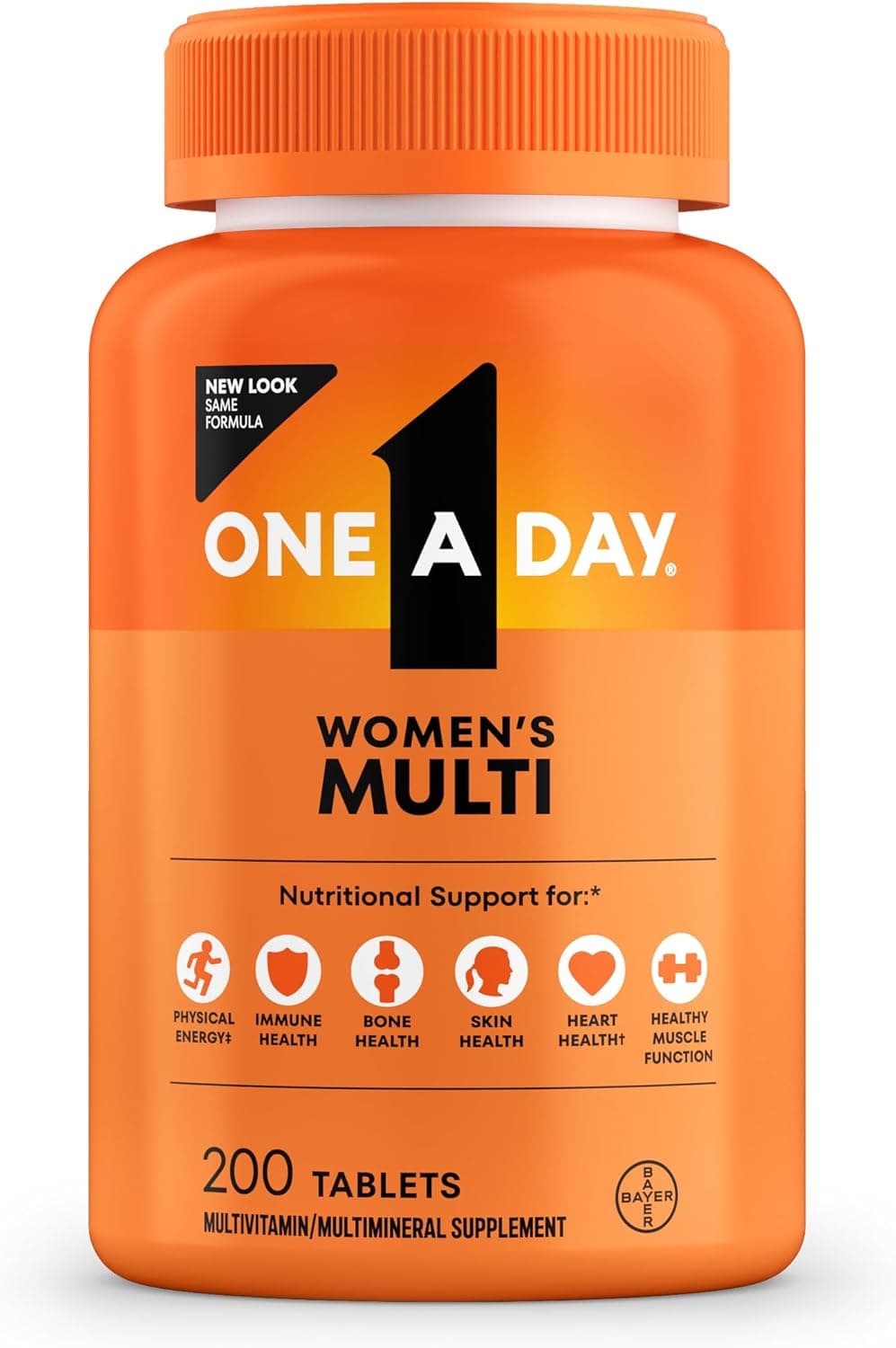
Multivitamin · Tablet
One A Day Multivitamin for Women — Daily Vitamins with Biotin, Calcium, Folic Acid, Iron & Zinc, 200 Ct
A broad daily multivitamin aimed at women who want one tablet to cover many common micronutrient gaps alongside food. It bundles minerals such as iron and zinc with B-vitamins and antioxidants often highlighted on women’s formulas.
What stands out
- Convenient once-daily format for general nutritional support (not a meal replacement).
- Includes folic acid, iron, and calcium—nutrients many women are encouraged to track in the diet.
- Large count bottle suits households that prefer fewer restock trips.
Practical considerations
- Iron-containing multis are not appropriate for everyone; confirm needs with a clinician, especially if you have iron overload risk.
- Take with food if your stomach is sensitive to minerals.
Full review
Dietary supplements are not evaluated by the FDA for safety or efficacy in the same way as drugs. This long-form review is for general education only and is not medical advice, diagnosis, or treatment. Discuss any supplement with a qualified clinician, especially if you are pregnant, nursing, take prescription medications, or have a chronic condition.
Who this women’s daily tablet is designed for
One A Day’s women’s multivitamin in tablet form is aimed at adults who want a single daily product to complement—not replace—a mixed diet. The positioning emphasizes nutrients that frequently appear in women’s health conversations, including iron, folic acid, calcium, zinc, and biotin, alongside a broad spectrum of vitamins that mirror what many mainstream multis include. If you already eat a varied pattern with plenty of produce, dairy or fortified alternatives, and adequate protein, your marginal benefit from any multi may be smaller than marketing suggests; if your diet is narrow, repetitive, or restricted for medical, cultural, or budget reasons, a multi can be a practical way to reduce the chance of low intake for several micronutrients at once. The 200-count bottle is a convenience play for households that dislike frequent reorders and are comfortable storing a larger bottle in a cool, dry cabinet away from children and pets.
Tablets differ from gummies in important ways: they can often pack more minerals per serving without the sugar matrix gummies require, and they usually avoid the gelatin or pectin texture issues that bother some users. They can still be large, chalky, or mildly irritating to an empty stomach when minerals are present, which is why many people take multis with breakfast. Because this formula includes iron, it is not automatically appropriate for every adult; some clinicians discourage routine iron in people who do not need it, while others are comfortable with modest amounts in a multi when diet is uncertain. The only way to personalize that decision is with labs and history, not with a product page.
How to read the label without chasing miracle claims
Supplement Facts panels list serving size, amounts per serving, and percent daily values where they exist. Percent daily values are based on general reference intakes and do not map perfectly onto every individual’s needs, especially during pregnancy, lactation, illness, or medication use. When comparing women’s multis, look beyond marketing phrases and compare iron forms and amounts, calcium and whether it is split across the day, vitamin D potency, and whether the product includes nutrients you already take elsewhere (for example a separate vitamin D or calcium tablet). Accidental double-counting is one of the most common issues people create for themselves when stacking products that each contain moderate doses of the same fat-soluble vitamins or minerals.
Structure and function language on bottles describes roles of nutrients in normal physiology; it is not the same as evidence that taking extra amounts improves outcomes in otherwise healthy people. That distinction matters because multis are among the most advertised categories online, where thumbnails and bullet lists can imply completeness or superiority without nuance. A balanced approach is to treat the multi as a baseline support tool, keep expectations modest, and prioritize food patterns, sleep, movement, and medical follow-up for anything that feels like a symptom rather than a lifestyle preference.
Iron, calcium, and practical timing
Iron and calcium can interfere with each other’s absorption when taken together in large boluses, which is one reason some formulations keep calcium modest and expect separate calcium if your clinician wants a higher total. If you take thyroid hormone, certain antibiotics, or bisphosphonates, spacing is not a trivial detail—pharmacists often recommend separating mineral-heavy supplements from those medications by several hours. Iron can also cause constipation, dark stools, or nausea in sensitive users; taking the tablet with food, splitting discussion with a clinician about form or dose, or switching strategies entirely are common responses when side effects appear.
If you have hemochromatosis, repeated transfusions, or other iron-loading conditions, iron-containing multis are generally inappropriate unless a specialist directs otherwise. Conversely, if you have documented deficiency, your clinician might prefer a targeted iron product rather than relying on a multi alone. These nuances are exactly why a general review cannot tell you whether this bottle is right for you; it can only highlight the questions worth asking.
Quality, storage, and buying on marketplaces
Large consumer brands typically rotate packaging while keeping the same ASIN; always confirm the Supplement Facts image on the live listing matches what arrives. Heat and humidity accelerate degradation of some vitamins, so bathroom storage is usually worse than a pantry. Check seals, expiration dates, and any child-resistant cap instructions if young children are in the home, because iron-containing products deserve the same caution as medications. When purchasing from third-party sellers, counterfeit risk is low for mainstream SKUs but not zero; buying from reputable fulfillment channels reduces uncertainty.
If you notice color changes, unusual odor, or crumbling tablets, contact the manufacturer’s quality line and avoid consuming questionable product. Keep a photo of the lot number in case you ever need to reference it. These habits matter more than chasing minor brand-to-brand differences in filler ingredients for most users.
Bottom line for shoppers comparing women’s multis
This SKU is a mainstream, once-daily style women’s tablet multi with iron and a large count for convenience. It will appeal to users who want mineral-inclusive coverage and do not mind swallowing a tablet. It will be a poor fit for people who need iron-free formulas, who already meet all micronutrient targets from diet plus other supplements, or who want gummy convenience without sugar tradeoffs. Use your clinician’s guidance, compare overlap with anything else you swallow in the morning, and treat the purchase as a long-horizon habit rather than a quick fix.
Nutcor Lab does not provide medical advice; this review is educational. Supplements are not intended to diagnose, treat, cure, or prevent disease. Always read the official label on the listing you purchase, because formulations and images can change.