Multivitamin · Tablet (small)
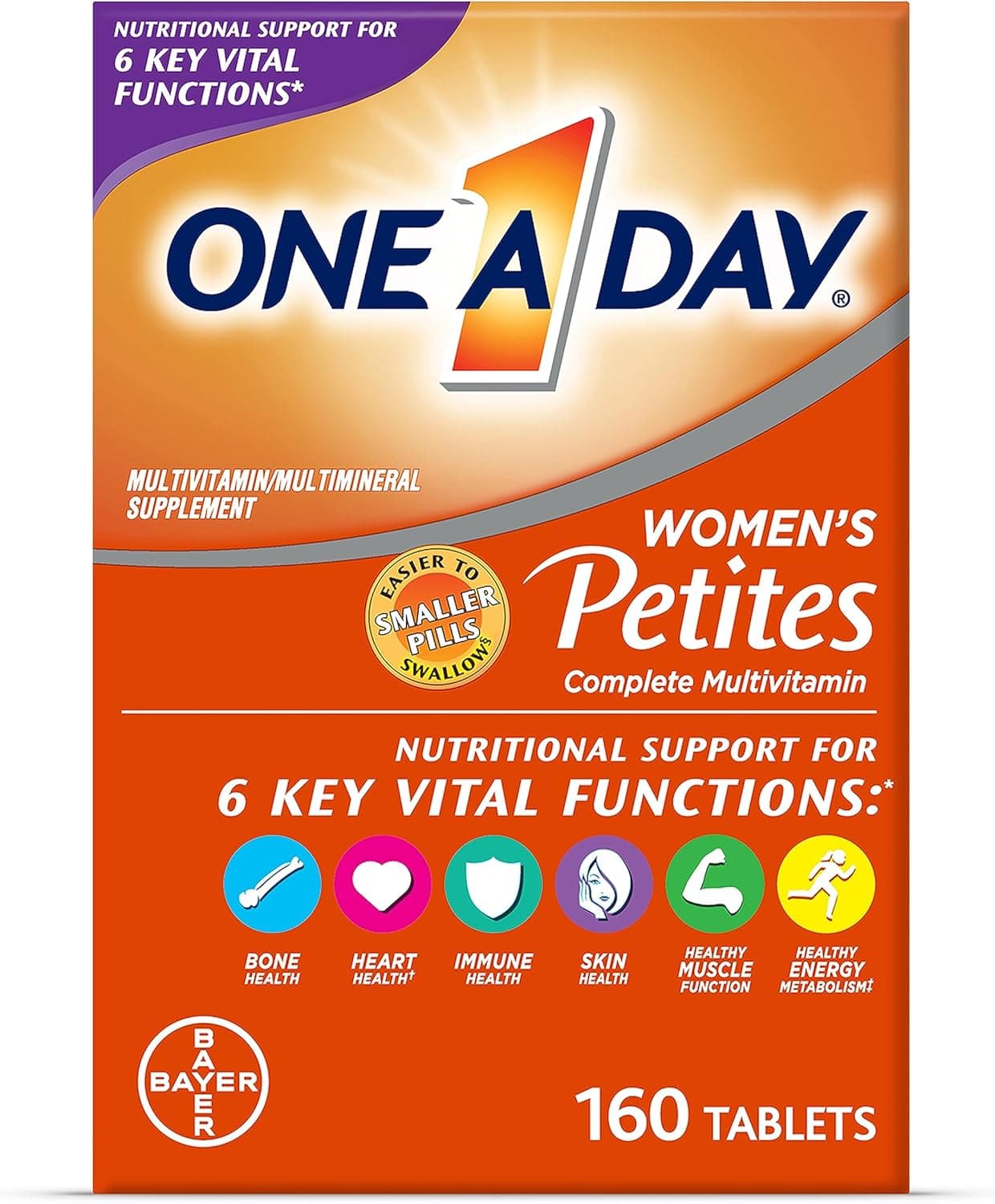
One A Day Women’s Petites Multivitamin — Vitamins A, C, D, E, Zinc, B Vitamins, Biotin, Folate, 160 Tablets
Smaller tablet size for women who want a full multi profile but struggle with large pills. Nutrient emphasis includes immune-support vitamins and B-complex coverage.
What stands out
- Petite tablets improve swallowing comfort for many users.
- Two-tablet daily serving is common for this line—confirm on label.
- Good alternative to sugary gummies for glucose-conscious users.
Practical considerations
- Two tablets daily requires habit pairing (breakfast/dinner).
- Still review iron content relative to your health plan.
Full review
Dietary supplements are not evaluated by the FDA for safety or efficacy in the same way as drugs. This long-form review is for general education only and is not medical advice, diagnosis, or treatment. Discuss any supplement with a qualified clinician, especially if you are pregnant, nursing, take prescription medications, or have a chronic condition.
Petite tablets for women who hate swallowing giants
One A Day Women’s Petites splits a full multi profile across smaller tablets so users with gag reflex sensitivity or esophageal motility quirks can still access folate, iron (verify label), B-complex coverage, antioxidant vitamins, and zinc without choking anxiety. A 160-count bottle often implies an eighty-day supply if the daily serving is two tablets—confirm on your exact label because miscounting turns budgeting and nutrient totals wrong overnight.
Petite size does not mean petite nutrient needs; pregnancy, heavy training, celiac disease, and bariatric histories still require specialist-tailored plans.
Two-tablet adherence hacks
Pair one tablet with breakfast and one with dinner to anchor habit cues and spread mineral load for stomach comfort. Phone reminders outperform hope. Travel pill cases should carry both halves daily to avoid accidental underdosing on trips.
If you frequently skip the second tablet, you may be underfed on half the formula—consider switching to a true one-per-day large tablet if swallowing allows.
Iron content and reproductive life stages
Women’s multis often include iron for menstruating users; postmenopausal women sometimes need less or none depending on genetics and diet. Hemochromatosis carriers and frequent red-meat eaters may not want extra iron. Labs guide that decision better than marketing segments labeled “women.”
Vegetarian women may still need iron support but also copper balance—multis are coarse tools.
Comparison with women’s gummy multis
Gummies taste better but may omit or lower minerals; petites preserve tablet-style mineral payloads with smaller geometry. Glucose-conscious users often prefer tablets.
Women’s 50+ formulas adjust iron and sometimes calcium emphasis—age labels are not interchangeable.
Overlaps with calcium, D, and fish oil stacks
Summing fat-soluble vitamins across products prevents accidental chronic excess. Mineral totals matter for kidney stone formers taking extra calcium elsewhere.
Spacing rules still apply for thyroid meds and certain antibiotics.
Lifestyle: iron absorption and menstrual health
Vitamin C–rich foods with plant iron improve absorption; tea and coffee with meals blunt it. Heavy menstrual bleeding deserves gynecology evaluation—not silent iron supplementation for years.
Endurance athletes with footstrike hemolysis sometimes have unique iron kinetics.
Disclaimer
Nutcor Lab does not provide individualized supplement plans. Products are not FDA-approved to treat deficiencies.
Consult clinicians for fatigue, pallor, or pica.
Petite tablets in purses, gym bags, and caregiver med boxes
Two-tablet products confuse automated pill dispensers programmed for singles; reprogram when switching from a one-a-day brand. Petites fit better in slim wallets for restaurant meals where you need minerals spaced from antibiotics. If you donate blood, hydrate and eat iron-smart meals even when your multi includes iron—phlebotomy volume still matters.
College students should not share multis with roommates because iron needs differ by sex and diet.
Photograph both sides of the label because barcode stickers in stores sometimes obscure folic acid amounts.
Remote work ergonomics, blue-light glasses, and migraine overlap
Women with menstrual migraine may notice light sensitivity cyclically; multis do not replace triptan discussions with neurology. Blue-light filtering glasses help some screen users subjectively yet rarely substitute for scheduled breaks and correct prescription updates. If you take vitamin A derivatives for acne, compare vitamin A totals across multis to avoid accidental stacking.
Standing desks that actually get raised during meetings reduce neck strain more predictably than antioxidant milligrams on a petite tablet label.
Ergonomic assessments sometimes reveal monitor height set for a taller desk mate, which masquerades as chronic tension headaches misattributed to hormone cycles alone.
Occupational therapists fitting petite employees for keyboards sometimes discover chair cylinders stuck too low, which tightens scalenes before any vitamin panel looks abnormal.
Remote workers logging migraine days beside menstrual cycle days sometimes spot caffeine withdrawal patterns that multis cannot interpret for them automatically.