Eye health · Chewable
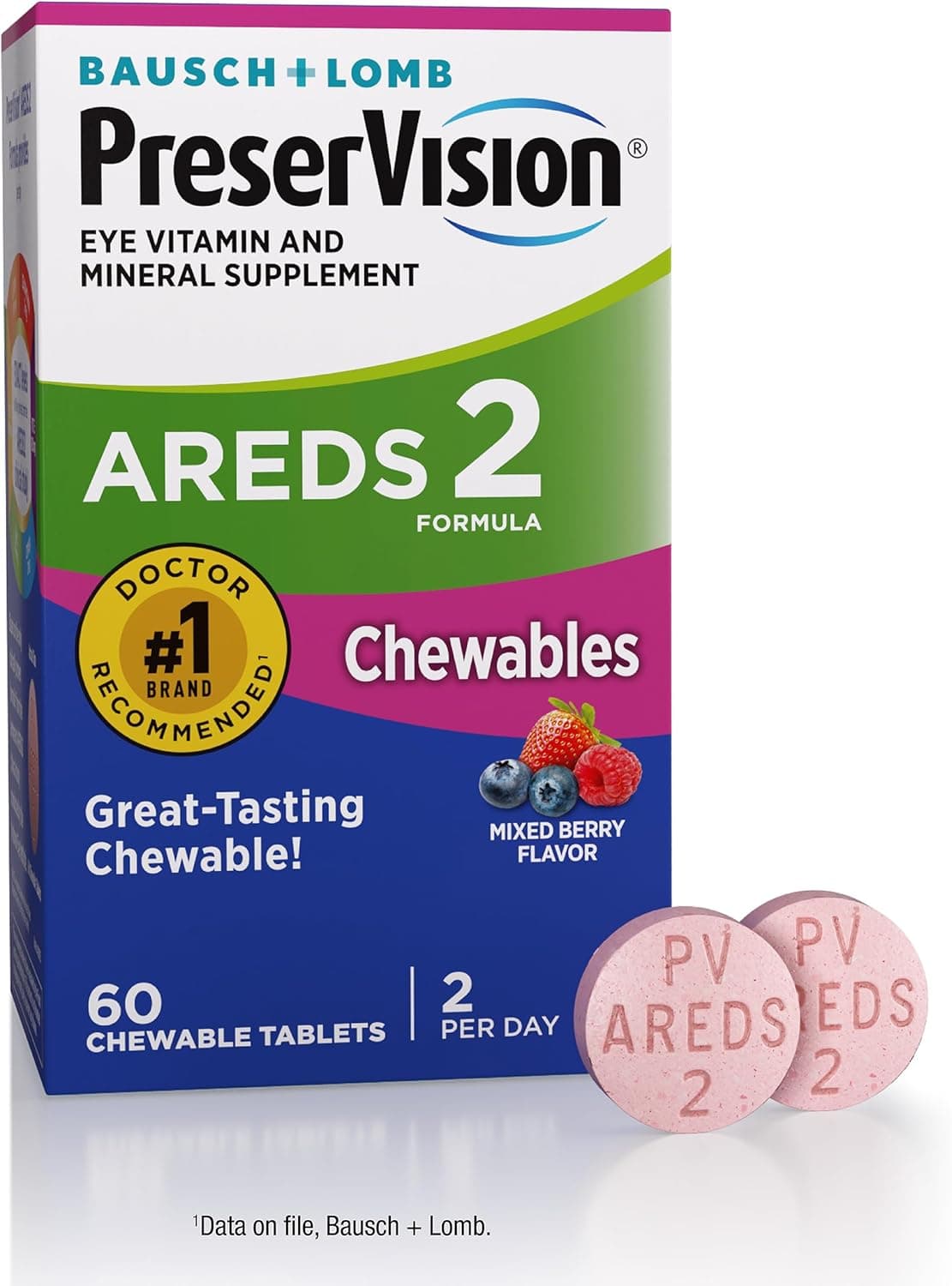
PreserVision AREDS 2 Eye Vitamins, #1 Eye Doctor Recommended Brand, Chewable Lutein and Zeaxanthin Supplement with Vitamin C, Vitamin E, Zinc, and Copper, Mixed Berry, 60 Tablets
The chewable mixed berry version of PreserVision AREDS 2 for adults who find softgels hard to swallow. Delivers the same AREDS 2 nutrient profile—lutein, zeaxanthin, vitamins C and E, zinc, and copper—in a chewable tablet format.
What stands out
- Same AREDS 2 nutrient profile as softgel SKUs in a chewable format for easier administration.
- Mixed berry flavor designed to improve daily adherence for swallowing-challenged adults.
- 60-count is approximately a two-month supply at labeled serving.
Practical considerations
- Check that chewable Supplement Facts match the softgel amounts if switching between formats on clinician guidance.
- Contains sweeteners—factor into dental hygiene routine and dietary sugar tracking.
Full review
Dietary supplements are not evaluated by the FDA for safety or efficacy in the same way as drugs. This long-form review is for general education only and is not medical advice, diagnosis, or treatment. Discuss any supplement with a qualified clinician, especially if you are pregnant, nursing, take prescription medications, or have a chronic condition.
Chewable AREDS 2: same formula, different delivery mechanism
PreserVision AREDS 2 Chewable Mixed Berry delivers the same AREDS 2 nutrient profile as the softgel SKUs in a chewable tablet format. The target audience is adults who find softgels difficult to swallow, dislike the fishy aftertaste occasionally reported with gelatin capsules, or simply prefer a chewable format for daily supplement adherence. The clinical rationale underlying the AREDS 2 trial—specific doses of lutein, zeaxanthin, vitamin C, vitamin E, zinc, and copper—applies to whichever format delivers those doses. Format substitution within the same nutrient profile does not alter the underlying evidence base.
Confirm that the chewable version lists the same Supplement Facts values as the softgel you may be switching from, since manufacturers occasionally reformulate to accommodate the chewable matrix—which imposes technical constraints on ingredient stability and palatability. Your ophthalmologist's guidance is about the nutrient amounts, so match those across formats.
Swallowing difficulties and supplement form selection
Dysphagia is a legitimate medical concern, particularly among older adults with neurological conditions, post-stroke sequelae, or structural issues affecting the throat and esophagus. For these individuals, a chewable is a meaningful accommodation—but crushing a softgel or tablet not designed for chewing can be unsafe for enteric-coated products and may affect potency. The chewable format resolves this by design: it is meant to be thoroughly chewed before swallowing, rather than crushed or dissolved.
For adults without swallowing difficulties who simply prefer the mixed berry flavor experience, the preference is entirely valid as a compliance motivator. Supplement adherence correlates with how much you enjoy or at minimum tolerate the product; a format you look forward to taking is better than a capsule you forget.
Sugar content and dental considerations in chewables
Chewable vitamin tablets typically contain sweeteners and flavoring agents to achieve palatability. Check the Supplement Facts and Other Ingredients section for added sugars, sugar alcohols (xylitol, sorbitol), and artificial sweeteners—each has relevance depending on your dietary restrictions, diabetes management, or GI sensitivity to sugar alcohols. Brushing or rinsing after a chewable supplement, particularly for people with existing dental concerns, reduces contact time of any sugars with tooth enamel.
The 60-tablet count is a two-month supply at the labeled serving. Plan reorders accordingly if this becomes part of a consistent daily routine.
Integrating the chewable into a medication and supplement routine
The mineral content in PreserVision AREDS 2 chewable—particularly zinc—can interact with absorption of certain antibiotics and bisphosphonates if taken simultaneously. Standard guidance is a two-hour separation from these drug classes. If you take thyroid medication in the morning, discuss with your pharmacist whether taking the chewable at a different time of day is prudent.
Lutein and zeaxanthin are fat-soluble carotenoids; absorption improves when consumed alongside a fat-containing meal. Chewing the tablet at breakfast or lunch rather than mid-morning on an empty stomach may marginally improve carotenoid bioavailability.
Disclaimer
Nutcor Lab does not prescribe AREDS therapy. Age-related macular degeneration and related retinal conditions require diagnosis and management by a licensed ophthalmologist.
Supplements are not FDA-evaluated to prevent or treat vision loss. Always read the current Supplement Facts on the product listing.