Eye health · Softgel
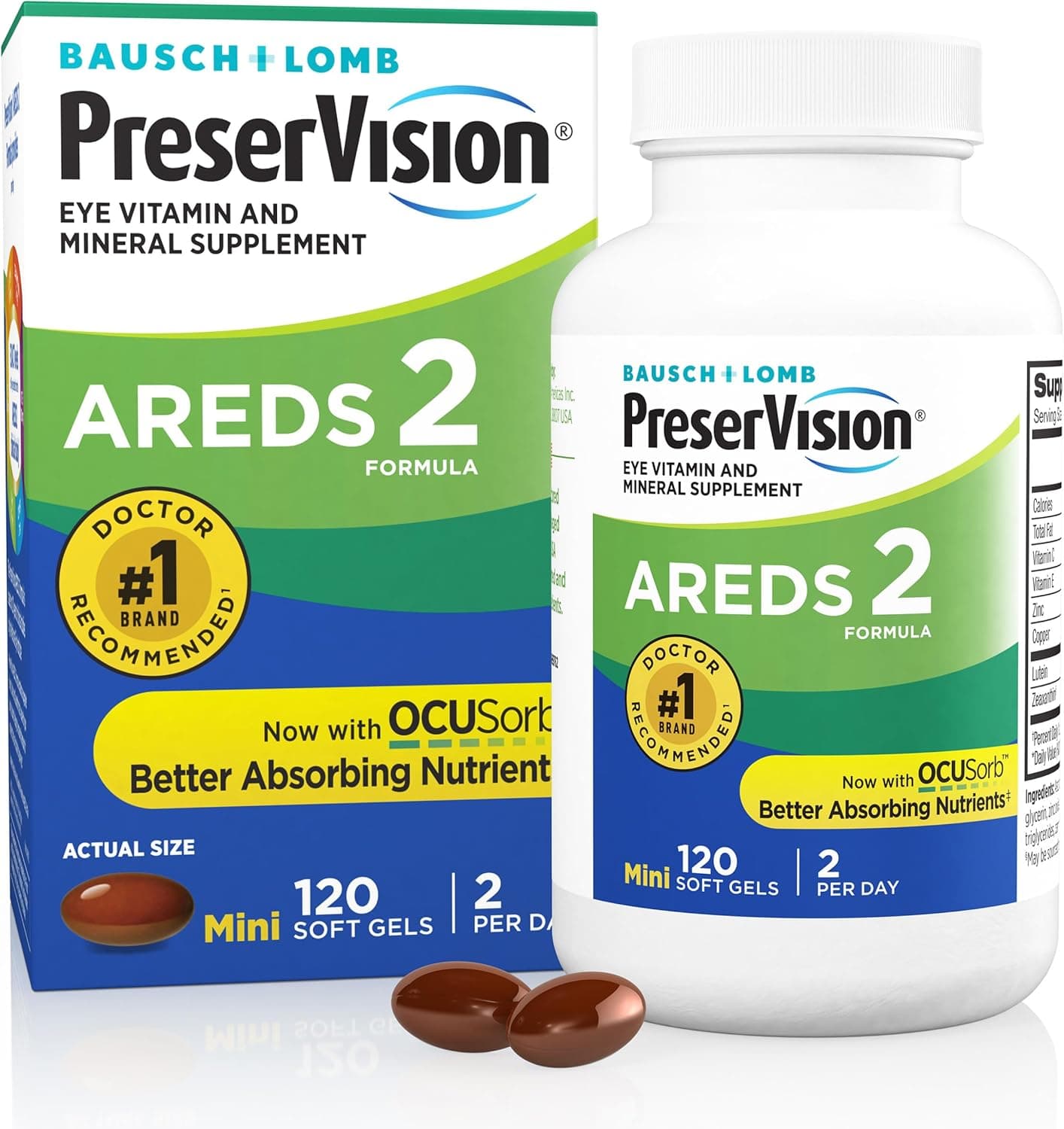
PreserVision AREDS 2 Eye Vitamins, #1 Eye Doctor Recommended Brand, Lutein and Zeaxanthin Supplement with Vitamin C, Vitamin E, Zinc, and Copper, 120 Softgels (Minigels)
PreserVision AREDS 2 is built around the nutrient profile from the National Eye Institute's Age-Related Eye Disease Study 2, combining lutein, zeaxanthin, vitamins C and E, zinc, and copper. Ophthalmologists commonly reference this specific formula when recommending AREDS supplementation for intermediate AMD.
What stands out
- Matches the AREDS 2 trial nutrient profile—lutein/zeaxanthin replaced beta-carotene from the original formula.
- Minigel format offers a smaller softgel size for adults who find standard softgels difficult to swallow.
- 120-count provides a two-month supply at the labeled once-daily serving.
Practical considerations
- Intended for adults with AMD as directed by an eye doctor—not a general vision wellness product for all adults.
- Contains zinc at AREDS-level doses; review total zinc intake across all supplements with your pharmacist.
Full review
Dietary supplements are not evaluated by the FDA for safety or efficacy in the same way as drugs. This long-form review is for general education only and is not medical advice, diagnosis, or treatment. Discuss any supplement with a qualified clinician, especially if you are pregnant, nursing, take prescription medications, or have a chronic condition.
PreserVision AREDS 2: what the clinical trial background actually means
The original AREDS and subsequent AREDS 2 trials were large, long-running National Eye Institute studies evaluating whether a specific combination of nutrients could reduce the risk of progression from intermediate to advanced age-related macular degeneration. The formulation used in AREDS 2 included lutein and zeaxanthin (replacing beta-carotene from the first trial), vitamin C, vitamin E, zinc, and copper. PreserVision AREDS 2 is one of the products built around that published nutrient profile. This matters because ophthalmologists who recommend 'AREDS supplementation' are referencing that specific composition—swapping to a different eye supplement with similar-sounding ingredients is not the same thing unless a clinician confirms dose equivalence.
Who the clinical data applies to is equally important: the trials enrolled adults with intermediate AMD or advanced AMD in one eye. Adults without AMD, adults with early AMD, or adults using these products for general vision wellness are outside the studied population. That is not a reason to panic if your ophthalmologist has recommended it for you, but it is a reason to have that conversation explicitly rather than starting AREDS supplements independently.
Minigel format: why it exists and practical considerations
The 120-count bottle uses the minigel format, which is a smaller softgel than the original PreserVision softgel SKU. The trade-off is typically that two minigels constitute a serving, keeping total capsule size more manageable for adults who struggle with large supplements. Verify the current Supplement Facts on the live listing because serving sizes, pill counts per serving, and daily totals can shift across packaging iterations. If a caregiver or pharmacist is coordinating a multi-bottle regimen for an older parent, confirm which variant is in hand before adjusting pill organizers.
Fat-soluble vitamins (including E) in a softgel base absorb better when taken with a fat-containing meal. A handful of nuts, a piece of avocado toast, or a normal lunch provides enough dietary fat to support absorption. On empty-stomach days absorption may be less consistent.
Zinc, copper, and the mineral balance rationale
AREDS-level zinc (80 mg oxide per day in the original; 25 mg in some AREDS 2 formulations) is substantially higher than typical multivitamin zinc. Copper was added because chronic high-zinc intake can deplete copper stores by competing for absorption. This is a feature of the specific AREDS design, not an arbitrary pairing. If you are also taking a zinc-containing multivitamin or separate zinc supplement, the combined daily total matters—consult your eye doctor or pharmacist about your complete stack before assuming more zinc is better.
Interactions with certain antibiotics (particularly quinolones and tetracyclines) and thyroid medications are well-documented for zinc and other minerals. Standard guidance is to separate mineral supplements from those medications by at least two hours. This applies to PreserVision just as it would to any zinc-containing product.
Lutein, zeaxanthin, and macular pigment
Lutein and zeaxanthin accumulate in the macula, the central portion of the retina, where they contribute to macular pigment optical density. Leafy greens, egg yolks, and orange and yellow vegetables are dietary sources; supplementation is an attempt to increase intake when diet falls short of levels researchers have observed in those with denser macular pigment. The carotenoid amounts in AREDS 2 (10 mg lutein, 2 mg zeaxanthin) reflect what was used in the trial rather than an arbitrary formulation choice.
AREDS 2 replaced the original formula's beta-carotene with lutein/zeaxanthin partly because a subgroup analysis in former smokers suggested elevated lung cancer risk from beta-carotene at high doses. If you used the original PreserVision formula containing beta-carotene and are a current or former smoker, this history is relevant to your ophthalmologist's current recommendation.
How PreserVision fits within a broader supplement stack
Most adults taking PreserVision are also taking other products—a multivitamin, a blood pressure or cholesterol medication, a calcium supplement, or an omega-3. Reviewing the combined nutrient totals with a pharmacist or eye specialist prevents over-accumulation of fat-soluble vitamins (A, D, E, K share metabolic pathways) and catches mineral timing conflicts. The softgel is not a multivitamin replacement; it targets specific ocular nutrients at specific doses and lacks the breadth of a multi.
If your ophthalmologist is involved in recommending PreserVision, loop them into any changes to your other supplements. What looks like a harmless add-on from a retail perspective can alter cumulative micronutrient levels meaningfully over months of daily use.
Disclaimer and next steps
Nutcor Lab does not prescribe AREDS therapy or diagnose AMD. This content is educational; age-related macular degeneration is a medical condition requiring diagnosis and management by a licensed ophthalmologist.
Supplements are not FDA-evaluated to prevent, treat, or cure vision loss. If you have concerns about your vision, schedule a dilated eye exam rather than self-treating with supplements alone.