Eye health · Softgel (minigel)
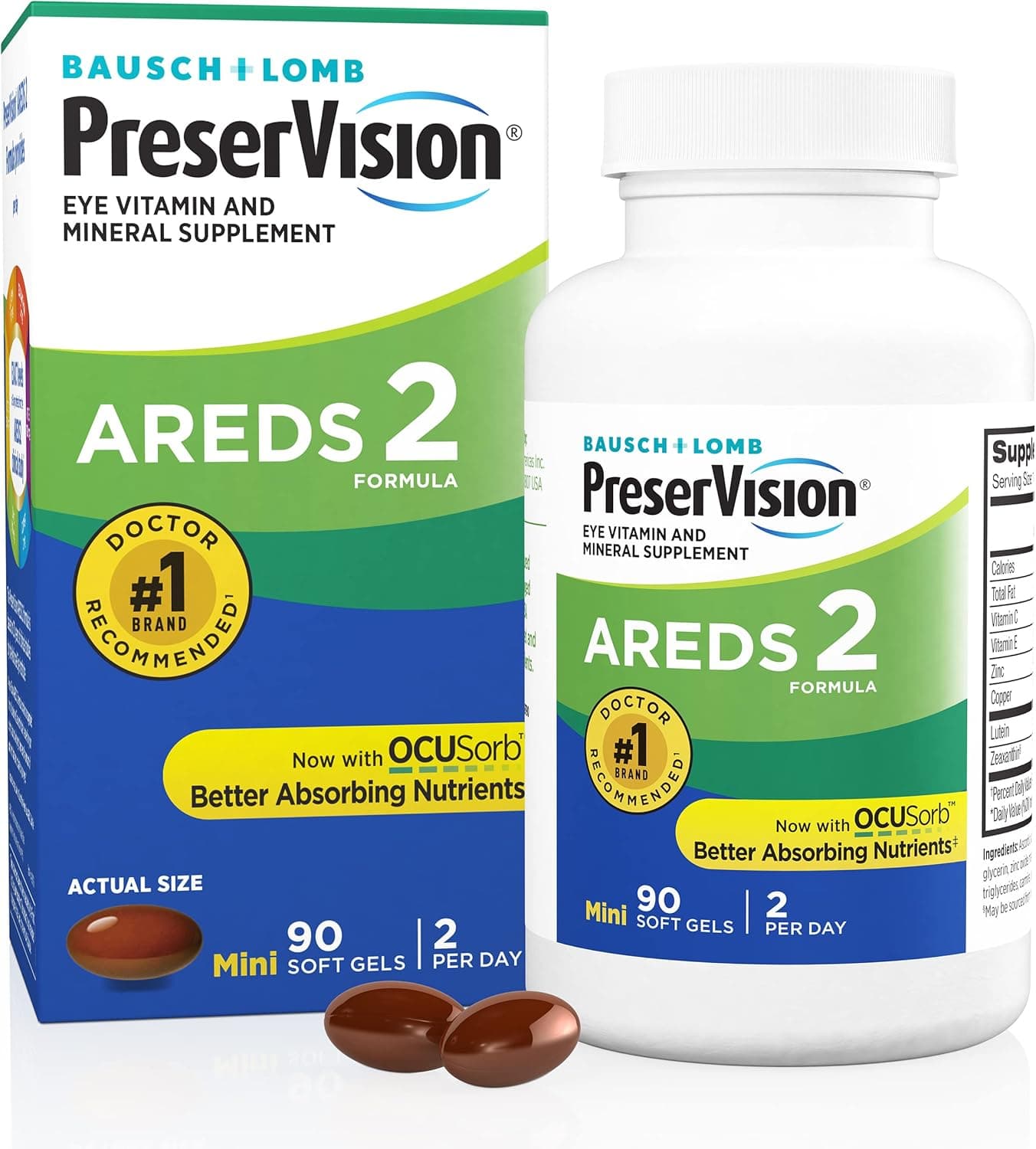
PreserVision AREDS 2 Eye Vitamins — Lutein & Zeaxanthin with Vitamin C, E, Zinc, Copper, 90 Softgels
The well-known AREDS2-inspired formula category from Bausch + Lomb, commonly discussed for intermediate AMD under ophthalmologist guidance. This is a specialized eye supplement, not a general multi.
What stands out
- Aligns with NIH AREDS2 nutrient themes (lutein/zeaxanthin substitution variants exist by SKU).
- Doctor-recommended positioning in age-related macular health conversations.
- Minigel format can be easier to swallow than large capsules.
Practical considerations
- Use only when your eye specialist agrees—it is not for everyone.
- Copper included to balance high zinc intake per AREDS study design context.
Full review
Dietary supplements are not evaluated by the FDA for safety or efficacy in the same way as drugs. This long-form review is for general education only and is not medical advice, diagnosis, or treatment. Discuss any supplement with a qualified clinician, especially if you are pregnant, nursing, take prescription medications, or have a chronic condition.
PreserVision AREDS2 lineage: not a casual eye vitamin
Bausch + Lomb’s PreserVision AREDS2-inspired formulas sit in a distinct clinical lane from general multis or lutein-only beauty products. NIH AREDS trials studied specific antioxidant and mineral combinations in age-related macular degeneration contexts; commercial products iterate lutein/zeaxanthin substitutions and zinc doses by SKU. This minigel 90-count format targets swallowability while still delivering study-themed nutrient density that can upset stomachs if taken against label advice.
Self-treating blurry vision with AREDS pills while delaying diabetic retinopathy screening is unsafe.
Why zinc and copper appear together
High-dose zinc supplementation can induce copper deficiency over time; AREDS-era designs therefore included copper balance logic familiar to retina specialists. Random copper supplementation without zinc context is a different scenario entirely—do not extrapolate backwards.
Zinc also interacts with certain antibiotics; spacing matters for short courses.
Who should not start AREDS without retina counsel
Patients without intermediate AMD may not benefit and could experience unnecessary mineral load or urinary tract symptoms in susceptible individuals. Never borrow a relative’s eye vitamins because marketing sounds preventive.
Smokers historically had beta-carotene concerns in older AREDS formulations; newer lines adjusted ingredients—confirm which generation you purchased.
Differentiation from Ocuvite 50+ with omega-3
Ocuvite SKUs in our catalog layer omega-3s for broader ocular nutrition marketing; PreserVision emphasizes AREDS2 nutrient themes more narrowly. Some patients take one or the other, not both, to avoid doubling zinc into unsafe territory.
Bring bottles to ophthalmology appointments for reconciliation.
GI tolerance, mineral taste, and evening dosing
Large mineral loads can nauseate on empty stomachs; many users fare better with food unless contraindicated by another drug. Minigels help size but not necessarily iron-like mineral harshness if your stomach is sensitive.
If you develop unexplained anemia while on chronic zinc, ask about copper status.
Lifestyle: smoking cessation and UV protection still dominate outcomes
AMD risk modification includes stopping smoking, controlling blood pressure and lipids, and protecting maculas from UV. Pills do not replace those levers.
Genetic risk factors exist but do not change public health basics.
Disclaimer
Nutcor Lab does not prescribe AREDS therapy. Supplements are not FDA-approved to cure macular degeneration.
Follow your retina specialist’s exact product and dose instructions.
Amsler grids, home monitoring hype, and appointment cadence
Some retina clinics teach Amsler grid self-checks between visits; supplements do not replace those simple tools or OCT imaging schedules. If you notice new waviness, treat that as urgent ophthalmology triage regardless of how faithfully you swallow pills. Diabetic patients need anti-VEGF or laser conversations separately from AREDS shopping.
Blue-light glasses marketed online do not substitute for AREDS trial logic or for glycemic control.
Snow glare and water reflections increase cumulative UV exposure; sunglasses matter at lunch walks even when pills feel sufficient.
Low vision aids, magnifiers, and technology contrast settings
Macular disease patients often benefit from electronic magnifiers and smartphone contrast inversion before any oral nutrient shows subjective effect. Audiobook habits reduce eye strain during flare days when screens hurt. Support groups sometimes share coupon codes responsibly; still verify each AREDS SKU against your own retina doctor’s written recommendation.
Smart speaker voice commands reduce mis-taps when central scotomas obscure tiny on-screen buttons that younger relatives take for granted.
Public transit commuters should still use polarized sunglasses on snow-glare mornings even when supplement routines feel dialed in, because glare recovery is neurological as well as optical.
Low-vision occupational therapists sometimes laminate simplified medication charts with tactile bumps so patients with both macular loss and hand tremor can distinguish AREDS bottles from unrelated capsules.
Community libraries hosting large-print tax workshops remind seniors that supplement receipts belong in the same accordion folder as medical mileage logs when itemizing deductions.