Eye health · Softgel
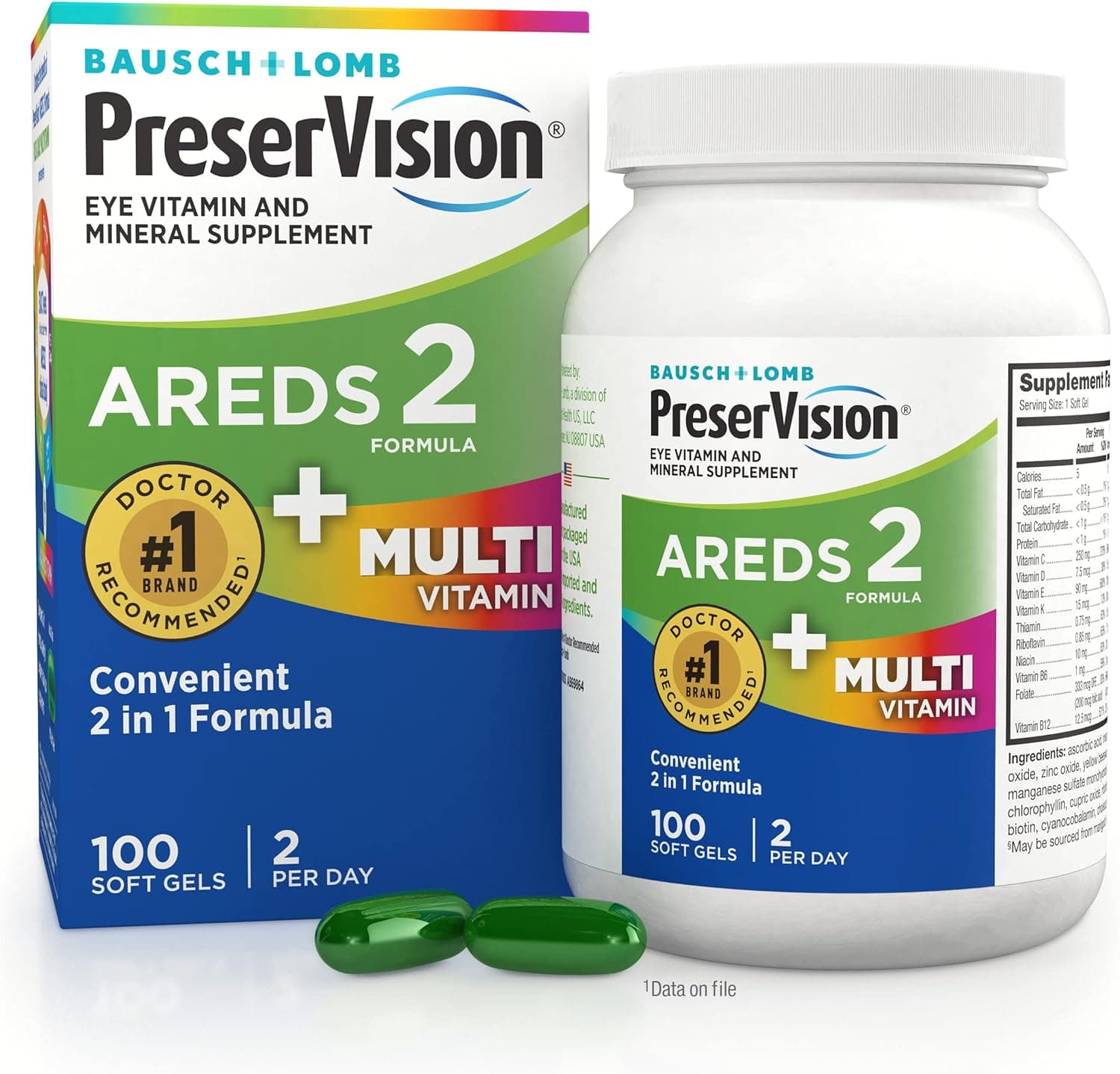
PreserVision AREDS 2 + Multivitamin, #1 Eye Doctor Recommended Brand, 2-in-1 Eye Vitamin with Lutein, Zeaxanthin, Zinc, and Vitamin C, D & E, 100 Softgels
A 2-in-1 combination that layers the AREDS 2 ocular nutrient profile onto a daily multivitamin base, including vitamin D. Designed to reduce pill burden for adults taking both an eye vitamin and a daily multi.
What stands out
- Consolidates AREDS 2 eye nutrients and daily multivitamin into one product to reduce bottle count.
- Adds vitamin D3 not present in the standard AREDS 2 standalone formula.
- 100-softgel count at two softgels per day is a 50-day supply.
Practical considerations
- Review total micronutrient overlap if also taking other supplements—vitamin D, E, and zinc are commonly duplicated.
- Not a direct substitution for separate AREDS 2 and multivitamin without ophthalmologist and clinician review of combined amounts.
Full review
Dietary supplements are not evaluated by the FDA for safety or efficacy in the same way as drugs. This long-form review is for general education only and is not medical advice, diagnosis, or treatment. Discuss any supplement with a qualified clinician, especially if you are pregnant, nursing, take prescription medications, or have a chronic condition.
AREDS 2 plus multivitamin in one softgel: convenience versus precision
PreserVision AREDS 2 + Multivitamin combines the AREDS 2 ocular nutrient profile with a broader multivitamin panel in one 100-softgel product. The appeal is reducing the number of separate bottles for adults who take both an eye vitamin and a daily multi. The tradeoff is the same one inherent in all combination products: dose control across every nutrient is less granular than managing two separate products. If your ophthalmologist has recommended a specific AREDS 2 formulation and your internist has recommended a specific multivitamin, verify that this combination product faithfully replicates both before making the switch.
Because this product layers on top of the AREDS 2 base, adults who are also taking a separate multivitamin would be double-stacking certain nutrients—vitamin D, vitamin C, zinc, and B vitamins are the most commonly duplicated. Before adding this product, inventory every supplement and medication contributing to your current micronutrient intake.
Who this combination makes the most sense for
The clearest use case is an adult who has been told by their ophthalmologist to use PreserVision AREDS 2 and who was previously also taking a separate daily multivitamin. Consolidating those into one product reduces pill burden—a real and meaningful quality-of-life factor for older adults managing multiple medications and supplements. The appeal diminishes for adults who need a specific high-dose single nutrient not well-represented in the multi component, or who require a formulation with therapeutic amounts of vitamin D3 based on documented deficiency.
Adults with intermediate AMD in one or both eyes who are already using a different AREDS 2 format (softgels without the multi component) should confirm with their eye doctor that the nutrient amounts in this combination version are equivalent to what was previously prescribed before switching.
Vitamin D3 and the AREDS addition
This combination formula includes vitamin D3, which the standard PreserVision AREDS 2 formulation does not prominently feature. For adults with documented vitamin D insufficiency—common in the 50+ population, especially in northern latitudes or with low sun exposure—this may be a meaningful addition. However, vitamin D dosing is personal: some adults need 1000 IU to maintain adequacy while others need 4000 IU based on labs, BMI, and baseline status. A 100-softgel bottle is not a substitute for monitoring blood 25-OH-D levels when vitamin D is a clinical concern.
Managing fat-soluble vitamin accumulation risk
This product includes vitamins D, E, and K—all fat-soluble vitamins that accumulate in body stores rather than being excreted freely like water-soluble vitamins. Vitamin E toxicity risk is low at typical supplement doses but increases when multiple products contribute. Vitamin K can interact with warfarin and related anticoagulants in ways that require careful monitoring. If you take blood thinners, discuss any change to your vitamin K intake with the prescribing clinician before switching supplement products.
The 100-softgel count gives approximately a 50-day supply (at a two-softgel per day serving). Establishing a refill rhythm—paired with whichever day you pick up other monthly medications—prevents gaps.
Disclaimer
Nutcor Lab does not prescribe AREDS therapy or provide medical nutrition advice. Age-related macular degeneration requires ophthalmologic diagnosis and management.
Supplements are not FDA-evaluated to prevent vision loss. Verify current Supplement Facts on the listing you purchase—formulations can change.